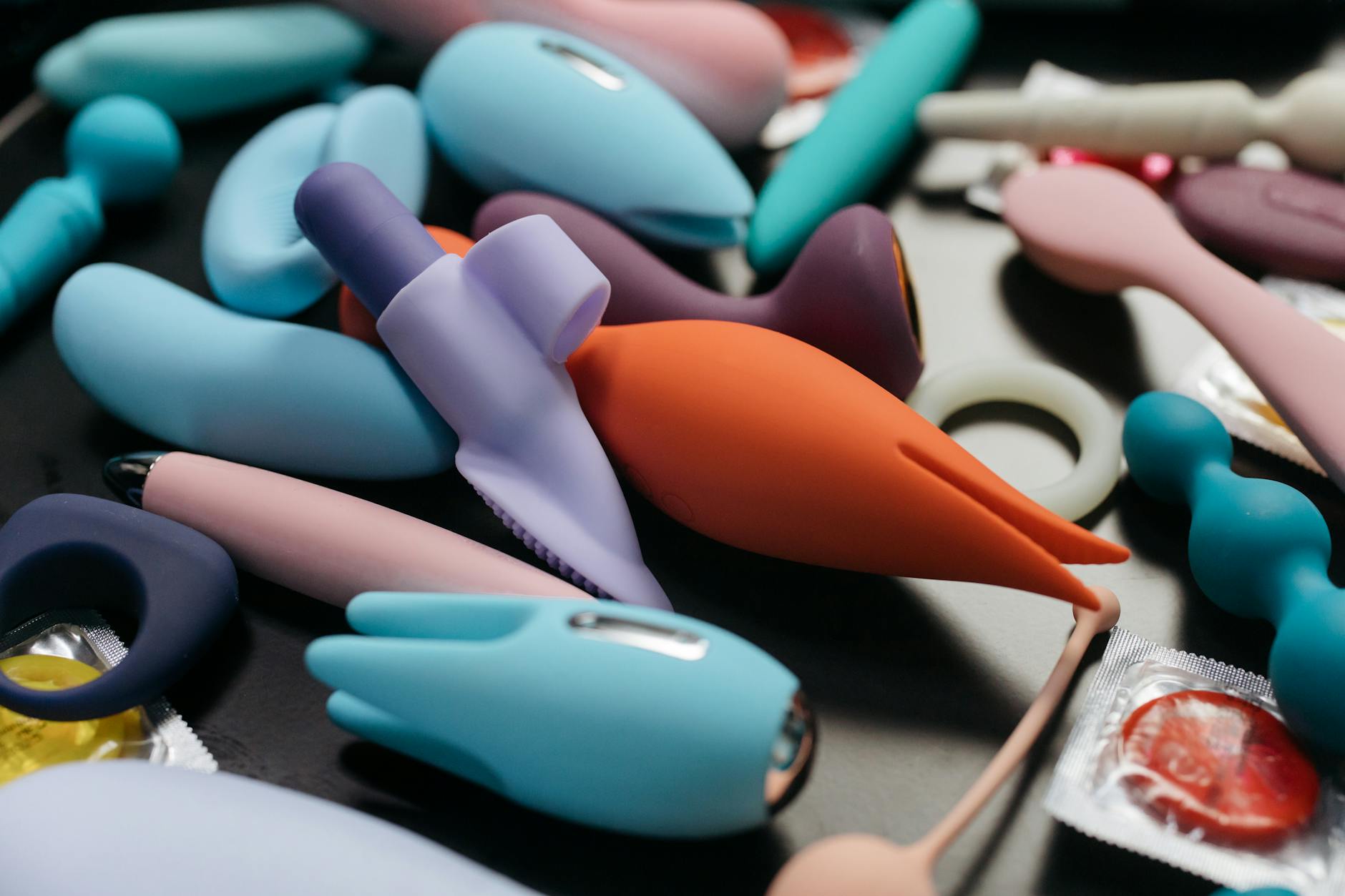
Here's the thing about pleasure and timing
You unbox your new lemon vibrator. You're excited. You turn it on, direct it where it's supposed to go, and... nothing. Or almost nothing. A vague tingle that feels like a muscle twitch, not the earth-shattering sensation you'd heard about. So you keep going, waiting for the click to happen, and after ten minutes of mounting frustration, you wonder if you got a dud or if your body just doesn't work this way.
This is wildly common. And it's almost never about the toy.
Why sensation doesn't always hit immediately
Pleasure isn't a light switch. It's a slow build, and your nervous system has to learn to recognize the new sensation pattern before it can amplify it. When you switch to air-suction toys like the Lem, you're introducing a completely different type of stimulation than what you might be used to.
Here's what's actually happening on a neurological level. Your clitoris has about 8,000 nerve endings, but those nerves don't all fire at once for a new stimulus. It takes repeated exposure for your brain to learn the pattern, interpret it as pleasure, and create the feedback loop that builds arousal. The first time you use a lemon vibrator, your nervous system is essentially seeing a stranger and deciding if it's safe. That takes time.
Additionally, genital sensation varies wildly from person to person based on where your nerve endings are densest. Some people's most sensitive spots are on the outer clitoral glans. Others feel more in the vestibular area or the clitoral shaft itself. If you're pointing the lem at the wrong micro-zone for your anatomy, you could be directing stimulation at a less responsive area. That's not a failure. It's just anatomy.
The arousal context you're ignoring
You can't separate sensation from context. Your brain is your largest sexual organ, and it has to be somewhat on board for pleasure to register. If you're using a lemon clitoral vibrator while anxious, distracted, in pain, rushing, resentful, or simply not in the mood, your sympathetic nervous system (the fight-or-flight one) is partially active. When that system is engaged, blood flow away from your genitals increases, sensitivity decreases, and arousal takes much longer to build.
I see this constantly with people who expect lemon vibrators to work like a magic button. They pull out the toy with one hand while checking their phone with the other, or they carve out five minutes between other tasks, or they're testing it while stressed about something completely unrelated. Your body knows. And it's not going to reward that divided attention with immediate pleasure.
The mental load is real. If you're worried the toy won't work, that you're too numb, that something's wrong with you, or that your partner is judging you, that chatter in your head is draining arousal bandwidth. Arousal requires safety first. Everything else is secondary.
Medication, hormones, and the things nobody mentions
Certain medications genuinely delay or mute sensation. Antidepressants (especially SSRIs) are common culprits, as are some blood pressure meds, antihistamines, and hormonal contraceptives. If you're on any of these, your baseline sensitivity is already lower than it was before. A lemon vibrator will still work, but it might take longer to feel it.
Hormonal shifts also matter. If you're in a low-estrogen phase of your cycle, post-birth control, or navigating hormonal changes, your genital tissue is literally less engorged and less responsive. That's not personal. It's physiology. The same lemon clitoral vibrator that gave you mind-bending pleasure on day 14 of your cycle might feel like moderate humming on day 2. Both experiences are normal.
Pelvic floor tension also plays a role that most people don't realize. If your pelvic floor is chronically tight (from stress, from hours sitting at a desk, from past sexual pain or trauma), that tension limits blood flow to the clitoris and dampens sensation. You could have a lem vibrator on the highest setting and still feel muted, because the muscles surrounding your genitals are essentially choking off the pleasure signal before it can get through.
What actually changes when you give it time
Here's what I tell my clients. Spend a few sessions (and I mean three to five, minimum) exploring the lemon vibrator without any pressure to feel anything specific. The goal is just to get curious. Try different intensity levels. Try different positions. Try switching the toy on and then waiting 30 seconds to feel the anticipation build. Try it after you've already been aroused by something else.
After two or three sessions of play, something shifts. Your nervous system stops treating the sensation as novel and starts to recognize it as pleasure. The feedback loop activates. Suddenly the lem vibrator feels completely different from the first time, even though nothing physical has changed. Your brain has learned the pattern.
This is not a metaphor. This is how neural plasticity works. You're literally retraining your sensory system to amplify this particular signal.
The positioning puzzle most people miss
If you're still not feeling much after a few sessions, the problem might be where the toy is pointed. The clitoris has external and internal parts. The glans (the visible tip) is what most people think of, but the clitoral body extends into your body, and stimulation can feel completely different depending on angle and depth of contact.
Try moving the lem slightly up, down, left, or right. Try angling it differently. Try applying it at the base of the clitoris where the body begins, rather than the glans. Some people need direct clitoral contact. Others respond much better to indirect stimulation on the hood or the sides.
If you're using a lemon vibrator with a partner, communication is essential. You can guide their hand (or the toy) to the exact spot that works. You can tell them to hold it still rather than moving it, or to increase intensity gradually. That kind of feedback is the difference between a mediocre experience and a great one.
When it's not about technique
Sometimes the delay isn't about timing or positioning. It's about pelvic floor dysfunction, past sexual pain, or a disconnect between your mind and body that needs more than a toy to address. If you've been experiencing pain during sex, your body might have learned to guard against pleasure. If you have a history of sexual trauma, your nervous system might be wired to perceive touch as a threat, no matter how gentle.
These are real things, and they're worth addressing with a therapist who specializes in sexual health or somatic work. A lemon vibrator can absolutely be part of your healing, but it works best alongside proper support.
The patience piece that changes everything
One of the biggest shifts I've seen in my practice happens when someone stops treating a new toy like a test they're either passing or failing. You're not. You're getting to know your body's response to a new sensation pattern. That takes curiosity, not judgment. It takes time, not a deadline.
Give your lemon clitoral vibrator (or any lem vibrator) at least five solid sessions in a relaxed, low-pressure context before you decide it's not for you. Five sessions where your mind is mostly present, your nervous system is somewhat calm, and you're just exploring without expectation. After that, if it still isn't clicking, you've got real information. But most of the time, somewhere in sessions two through four, something shifts.
The pleasure was always there. Your nervous system just needed to recognize it.