
Here's what nobody tells you about pleasure
Most of us learned to rush. We rush through foreplay, rush through arousal, rush through the whole thing because there's always another task waiting. But pleasure doesn't work on a sprint schedule. It works on a ramping schedule. And the moment you give yourself permission to actually slow down, everything changes.
I work with couples and individuals who've spent years thinking something was wrong with their bodies or their desire. Then they pause. They stop reaching for the finish line. And suddenly they feel things they've never felt before.
Why slow exploration actually works better
Your nervous system needs time to downshift from daily stress into arousal. That's not weakness or low libido. That's how bodies work. When you're moving fast, you're still partly in fight-or-flight mode, which numbs sensation. When you slow down, your parasympathetic nervous system activates. That's when nerve endings wake up. That's when pleasure becomes possible.
Using lemon clitoral vibrators for slow exploration means you're not chasing an orgasm. You're investigating sensation. There's a massive difference. One is goal-oriented and tense. The other is curious and receptive.
Starting with your body, not the device
Before you touch the vibrator to your body, touch your body without it. Spend 10-15 minutes exploring what feels good. Where does touch feel electric. Where does it feel numb. What pace makes you want to stay, versus what pace makes you tense up.
This isn't meditation. You're gathering real data about your own nervous system. You're learning your geography. When you finally introduce a lemon vibrator, you're not starting from zero. You're building on something you already understand.
Many people skip this step because it feels inefficient. But it's the most efficient thing you can do. You're removing guesswork from the entire experience.
How to start with the vibrator
Start on the lowest setting. Not because you can't handle higher, but because low stimulation lets you feel nuance. You notice more. You feel texture and nerve response you'd miss at full intensity.
Place it against your body without turning it on first. Get used to the weight, the temperature, the shape. Your body relaxes into contact before vibration even enters the equation.
When you do turn it on, keep it at setting 1 or 2 for at least five minutes. You're not trying to build toward anything yet. You're just listening to how your body responds. Does sensation concentrate in one spot or radiate outward. Does it feel good immediately or does it need time to bloom.
This is not quick. It shouldn't be quick. Quick means you're still in goal mode.
Building sensation without rushing the timeline
Once you're familiar with the lowest settings, you might experiment with slightly higher ones. But only if you want to. There's no progression requirement here. Some people spend weeks at setting 2 and discover things they've never felt before.
Move the vibrator slowly across different areas. Linger. Go back to spots that felt good. Let your breathing slow down and deepen. Most people hold their breath during pleasure because they think they should be moving toward intensity. But shallow breathing keeps you tense. Breathing in deep, long strokes changes the whole game.
If you're exploring with a partner, communication becomes essential. Not the "do you like this" check-in kind, but the vulnerable kind. "I want to slow down." "I want to try this at a different pace." "I want to stop and just feel for a moment." Those statements take courage. That's where real intimacy lives.
What slow exploration actually reveals
When you're not rushing toward orgasm, you start noticing patterns. You notice that sometimes your body wants direct stimulation and sometimes it wants indirect touch nearby. You notice that some sensations feel good for thirty seconds and then you want something different. You notice that pleasure isn't one monolithic thing. It's a landscape with valleys and peaks.
You might discover that you can't orgasm at a certain pace, but you can feel incredible waves of pleasure without one. Or that orgasm comes easier when you're not expecting it. Or that the most intense sensations happen five minutes in, not fifteen. These discoveries only happen when you slow down enough to pay attention.
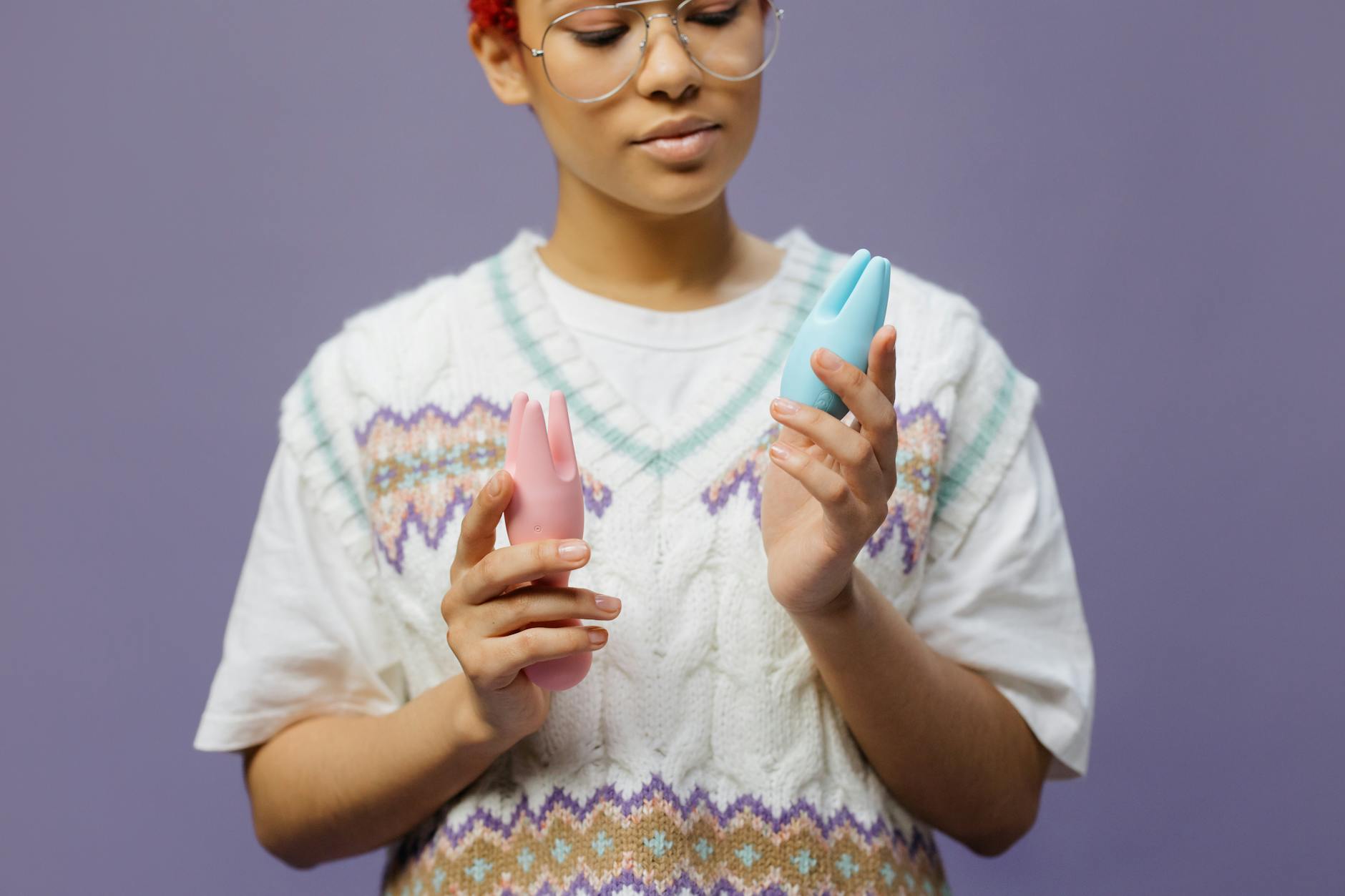
Photo by cottonbro studio on Pexels
The nervous system benefit that compounds over time
When you practice slow, intentional pleasure, you're doing something that sounds trivial but isn't. You're training your parasympathetic nervous system to activate on command. You're teaching your body that it's safe to relax. You're building a somatic memory of downshifted arousal.
After weeks of slow exploration, you'll notice that you enter that relaxed state faster. You'll notice that lower settings feel more satisfying even though nothing physically changed. Your nervous system got better at the work. That's neuroplasticity, and it's real.
For people recovering from stress, anxiety, or past experiences that've made touch feel complicated, this slow approach is often the only one that works. It's not about the vibrator. It's about regaining trust in your own body.
When to stay slow and when to speed up
Honestly, you don't have to speed up ever. Some people prefer slow exploration their entire lives. But if you do want to experiment with faster paces, only do it after you've spent real time with the slower ones. You need that baseline of what your body can feel when there's no rush.
If you're exploring pleasure after a long break from sex, slow is non-negotiable. Your nervous system needs to rebuild connection to sensation. Speed will just create frustration.
If you're reconnecting with your body after hormonal shifts, slow exploration helps you learn how your body responds now, not how it responded before.
Why this matters for your relationship
When you know your own pleasure landscape, you can communicate it. When you've spent time understanding what your body wants, you stop expecting partners to guess. You stop performing. You actually enjoy things.
Couples often think adding a vibrator means adding speed or intensity. But adding a lemon clitoral vibrator while also slowing down? That's where connection deepens. You're exploring together at a pace where both people stay present.
The permission piece
Here's what I tell every client. Your pleasure doesn't need to be efficient. It doesn't need to produce anything. It doesn't need to happen quickly. It exists for its own sake. Taking an hour to explore sensation is not time wasted. It's the whole point.
So give yourself that permission explicitly. Not as a thought, but as a decision. "I'm going to slow down." "I'm going to feel this." "I'm going to let this take whatever time it takes." Write it down if you need to. Tell your partner. Make it real.
That permission is where the real transformation starts. The vibrator is just the tool. You are the exploration.
Frequently asked questions
How long should a slow exploration session actually be?
There's no magic number. Some people do 20 minutes and feel complete. Others spend an hour. The metric isn't time. It's whether you're still discovering something or whether you're forcing it. If you're still curious, keep going. If you're starting to check the clock, you're done.
Can I use slow exploration with a partner, or is this mainly solo?
Both work beautifully. Solo exploration teaches you your own body. Partner exploration is about mutual discovery. If you're doing it with a partner, communication matters more. You need to be able to say "I want to stay here longer" without feeling like you're holding them back.
What if slow exploration makes me anxious instead of relaxed?
That's useful information. Anxiety during pleasure often points to something worth exploring with a therapist or coach. Sometimes it's perfectionism. Sometimes it's old relationship stuff. But pushing through it won't help. Honor the anxiety. Slow down even more if you can, or take a break and return when you feel safer.
Does slow exploration work if I have low sensation or numbness?
Yes, actually better than fast exploration. Low sensation often responds beautifully to sustained, gentle stimulation over time. Your nervous system might need five or ten minutes to wake up. That's fine. That's the whole point of taking your time.
Can I combine slow exploration with orgasm, or does it have to be one or the other?
Combine them. Slow exploration often leads to orgasm, but a different kind. Slower, longer, more diffuse. Some people discover they prefer that to the fast kind. Others like both depending on their mood. The slow approach just gives you access to the full spectrum.
What if my partner wants faster and I want slower?
Talk about it outside the bedroom first. Explain that slow isn't rejection of them. It's honoring your nervous system. Then compromise. Maybe some sessions are slow for you and they focus on other things. Maybe you take turns. Maybe you build intensity slowly together over a longer period. The point is saying it out loud.
The actual practice
Slow pleasure with lemon vibrators isn't a hack or a workaround. It's the foundation. Once you build it, everything else becomes optional. You might explore faster paces. You might stay here indefinitely. Either way, you've given yourself something that can't be taken back: the knowledge that your body is worth your full attention, and that attention itself feels incredible.
Start this week. Pick an hour when you have genuine privacy and zero obligations after. Silence your phone. Then begin where we started. Touch your body. Listen to what it tells you. Let that be enough.
If you need support navigating pleasure, communication, or relationship dynamics as you explore, I'm here. Get in touch anytime.