
The position problem nobody talks about
Here's the thing about clitoral vibrators: they work great when you're staying still. But the moment you want to change positions—whether you're with a partner or exploring solo—everything gets weird. The angle shifts, the pressure changes, and suddenly you're chasing the sensation instead of actually feeling it.
I hear this constantly from people using lemon vibrators and other external stimulators. They find a position that works, build momentum, then want to move. And the second they do, they lose it. So they either stay locked in one position (which gets uncomfortable) or they give up on the vibrator entirely. Both feel like failures. Neither is.
The truth is this: you can absolutely use clitoral vibrators across different positions. You just need to understand how angle, pressure, and stability change with each one. Once you do, you can move fluidly without breaking your own rhythm.
Why positions matter with external stimulation
When you're using a vibrator on the clitoris, you're not inside your body. That means every position change affects three things: the angle of approach, the amount of surface contact, and how much control you have.
With penetrative stimulation alone, you can shift around and still maintain sensation because you've got depth and internal contact. External stimulation is more precise. It's easier to lose the exact spot you need, especially if you're moving quickly or if your partner is setting the pace.
The other piece is pressure. Lying on your back, gravity pulls differently than when you're kneeling or on your side. Some positions naturally increase pressure against the vibrator. Others reduce it. And depending on your anatomy and sensitivity, that shift can take you from "this is perfect" to "wait, where did it go."
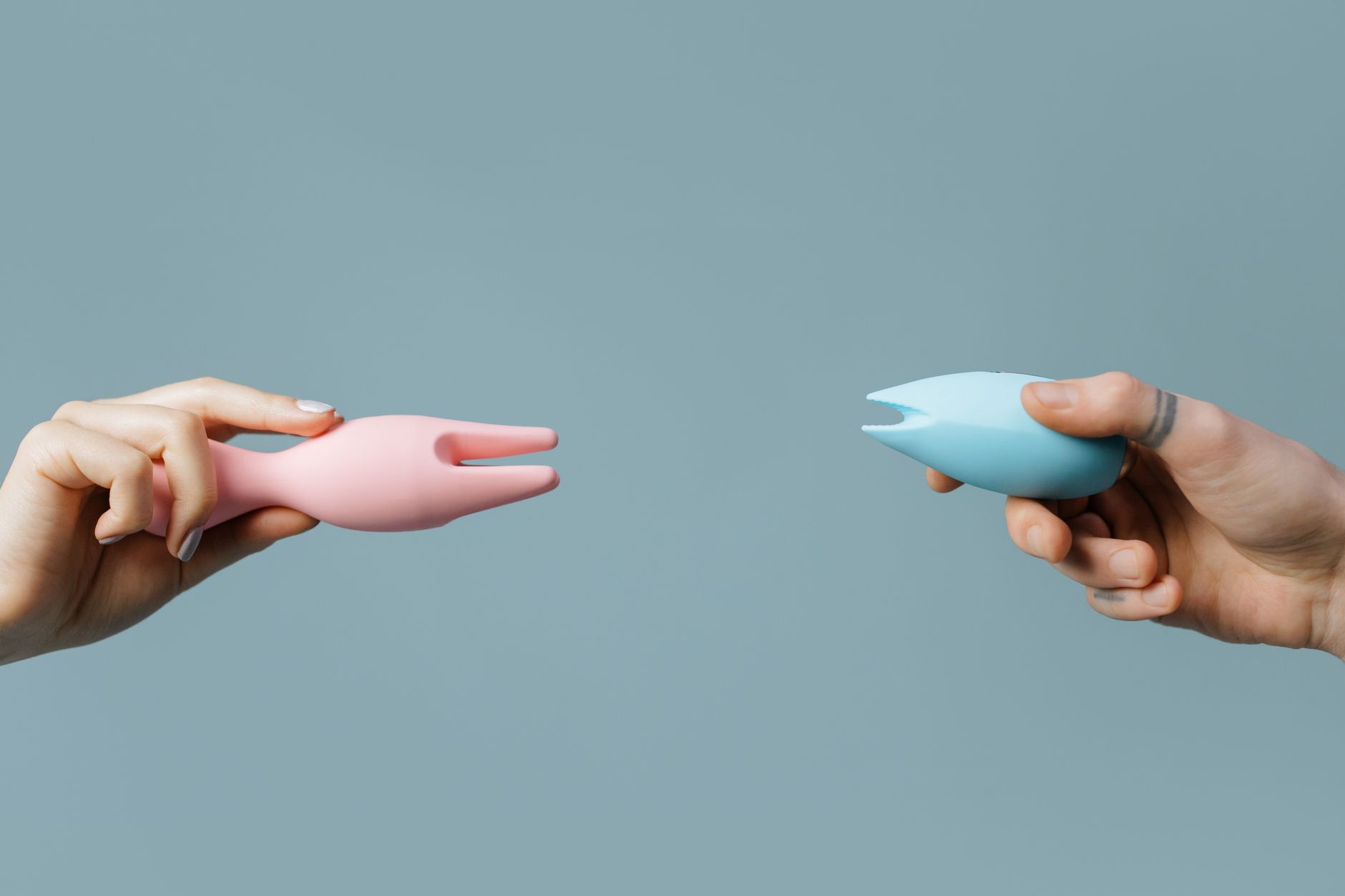
Photo by cottonbro studio on Pexels
The flat-on-your-back setup (the baseline)
Let's start here because this is where most people find their comfort zone first. You're lying down, gravity is working in your favor, and you've got full hand mobility. Your pelvic floor is relatively relaxed, which means sensation travels more easily through the tissue.
When you're using a Lem vibrator or other clitoral suction device on your back, the approach is straightforward. The device sits flush against your body, and your hand controls everything. This position gives you the most consistent pressure and the easiest angle of attack.
But here's what happens when you want to add a partner or switch things up: you lose the ability to control pressure easily. A partner might apply too much or too little. You might want to tilt your hips slightly to deepen penetration, which changes the angle of the vibrator. Suddenly you're coordinating two sensations at once—internal and external—and the external one keeps slipping.
The fix is subtle but crucial. Don't try to keep the vibrator perfectly still. Instead, let your hips do the work. Small tilts forward or back will adjust pressure while your hand keeps the device in the general area. Think of it as micro-adjustments, not repositioning. Your partner stays present internally while you're managing the external sensation. It takes about two minutes to find the rhythm, and then it locks in.
Side-lying positions (underrated and useful)
Lying on your side is wildly underrated for vibrator use, especially in partnered scenarios. Here's why: your pelvic floor is more engaged on your side, which actually increases sensation intensity. You've also got one hand free while the other holds the vibrator, so you can guide your partner's movement or adjust your own position without losing focus.
The challenge with side-lying is that gravity works against you slightly. The vibrator isn't naturally pressed against your body the way it is on your back. You have to maintain pressure manually. This sounds annoying, but it's actually an advantage once you realize it. You've got constant feedback about how much pressure you're applying, which means you can dial intensity up or down in real time.
The trick for side-lying is to angle the vibrator slightly upward. This compensates for gravity and keeps contact consistent. If you're with a partner who's penetrating, you can rest your outer leg on theirs, which creates a stable frame. Your inner leg stays bent for comfort. Your free hand adjusts the vibrator angle or depth as needed. This position also works beautifully for solo play because you can shift your weight slightly to change pressure without moving your hand.
One more benefit: side-lying naturally limits how much you can move around. That's actually good. You're less tempted to chase sensation and more focused on the specific stimulation you're getting. People often report longer, more intense orgasms in this position because there's less distraction.
Seated and kneeling variations (for control)
Now we're talking about positions where you're more upright. Seated on a partner, kneeling while they're in front of you, or kneeling solo while using a vibrator. These positions flip the pressure problem upside down. Instead of gravity not pushing hard enough, you're often bearing down too hard without meaning to.
When you're seated on a partner, your body weight is already creating significant internal pressure. Add a vibrator on top, and you can easily overwhelm yourself. The fix is to reduce how much weight you're putting into the vibrator. Use lighter hand pressure. If you're using a suction vibrator, start at a lower intensity. Let your partner's movement handle most of the sensation work while the vibrator adds a subtle layer.
Kneeling is different because you've got more control over your weight distribution. You can lower yourself onto a partner slightly, creating just enough pressure against the vibrator without overwhelming it. The advantage here is that you can also pull back instantly if sensation gets too intense. This makes kneeling one of the best positions for exploring the edge of your own pleasure without tipping over into discomfort.
For solo kneeling play, you can use a pillow under your knees for support and angle the vibrator from above. This takes pressure off your hand and lets you focus purely on sensation. It's also a position where small hip circles change the angle significantly, so you've got tons of ways to explore without actually shifting your whole body.
Standing and against-the-wall scenarios
Standing adds a weird element because you've got to think about stability. You can't relax into the sensation the way you can when you're lying down. But standing or braced against something can work beautifully if you set up the right frame.
Against a wall or with a partner's body for support, you've got a stable anchor. Your free hand rests, or holds your partner, and you can focus on micro-movements. The vibrator stays in one spot while your hips rock gently. This is excellent for extended sessions because standing actually engages your core, which some people find intensifies sensation.
The catch is that standing requires more pelvic floor engagement. If your pelvic floor is tight or if you're dealing with tension, standing might actually feel less pleasurable than lying down. This is why exploring multiple positions matters. You need to find which ones suit your body and your nervous system on any given day.
How to move smoothly between positions
Okay, so you've got a sense of how different positions work. Now the practical part: how do you actually transition without losing your groove.
The answer is slower than you think. Most people try to shift positions while they're actively chasing sensation. That's when everything falls apart. Instead, transition during a moment of plateau. Not during the build, not at the peak. Right in the middle, where sensation is steady but not escalating.
Communicate with your partner about timing. A simple "ready to move" tells them you're about to shift. They can adjust their pace or pull back slightly to give you space. Then you make the transition slowly. One limb at a time. One second. Your hand stays on the vibrator the whole time. Once you're settled in the new position, let sensation rebuild.
For solo play, the process is the same. You're building toward something. You plateau. You think about the position you want to try. You move into it. Then you start building again. You're not trying to maintain continuous intensity. You're creating little peaks and valleys. That rhythm is actually more sustainable than trying to chase one long peak.
Another practical tip: lower intensity while you're moving. If you're on pattern five, drop to pattern three during the transition. Reintensify once you're settled. This gives your nervous system permission to reset and reduces the frustration of losing sensation temporarily.
The mental piece (it matters)
Here's something nobody addresses: a lot of the "I can't change positions" problem is actually mental. You've found something that works. Your brain doesn't want to risk losing it. So you lock down, stay still, and white-knuckle your way to orgasm.
But locked-down tension actually reduces pleasure. Your pelvic floor tightens. Your breathing gets shallow. You stop being present. Then when you do try to move, everything feels off because you're tense, not because the position is actually wrong.
Before you start moving between positions, practice letting go slightly. On your back, try loosening your pelvic floor a tiny bit. Notice if sensation changes. Spoiler: it usually gets more intense, not less. Then practice moving a single limb while keeping the vibrator engaged. Move one leg. Keep the vibrator. Notice that you can move and maintain sensation.
This is about building trust with your own body. Once you realize you can shift positions without losing everything, you actually unlock way more pleasure. You're not locked down. You're fluid. You can stay with a partner, match their rhythm, and enjoy multiple sensations layering together.
Position combos that actually work
Some position combinations are genuinely superior to others. Lying on your back with internal stimulation is a classic for a reason. Kneeling while someone penetrates you from behind while you use a Lem vibrator offers both intensity and control. Side-lying with manual penetration and external vibration creates depth without pressure overload.
Solo, lying on your back is easiest to start. Side-lying comes next once you understand pressure management. Kneeling is the most intense. Standing is the most meditative.
The pattern is: easier positions first, harder positions once you've built confidence. Easier doesn't mean less pleasurable. It just means fewer variables to manage. You can get comfortable with sensation and positioning before you add complexity.
When you're with a partner, their position matters as much as yours. If they're entering from above (you on your back), you've got good access for external stimulation. If they're behind you (you on your knees), the angle is different. Communicate about which positions let you both stay comfortable and connected.
FAQ: Common position questions
Can I use a Lem vibrator in every position?
Yes, but some positions require more hand strength or pressure management. Lying down and kneeling are easiest. Standing and being entered from above require slightly more active engagement from you. None are impossible. Some just take practice.
Does position change how strong the vibrator feels?
Absolutely. Gravity, pressure, and pelvic floor engagement all change with position. The same vibrator on the same intensity will feel different when you're lying flat versus kneeling. This is why exploring multiple positions helps you learn your own body better.
What if I always lose sensation when I switch positions with a partner?
You're probably trying to transition during intensity instead of plateau. Slow down. Let things settle. Then move. Also check: are you communicating with your partner about what you need? They might be changing pace at exactly the wrong time. A quick conversation fixes this.
Is side-lying actually better for clitoral vibrators?
Not better, just different. For some people, yes. For others, lying flat is perfect. The only way to know is to try both and notice how sensation changes. Your preference might shift depending on the day, arousal level, or what you're in the mood for.
Can I use clitoral vibrators while being penetrated from any angle?
Yes, but some angles make it easier than others. Being penetrated from in front (you on your back or kneeling facing someone) gives you direct access to the clitoris with the vibrator. Being penetrated from behind (you on your hands and knees or from the side) requires you or your partner to reach around, which takes coordination. Both work. One takes more communication.
How long does it take to get comfortable switching positions?
About two to three sessions of intentional practice. Once you've successfully transitioned twice, your brain relaxes and trusts the process. After that, it becomes automatic.
The bigger point
Positions matter, but flexibility matters more. The goal isn't to find the one perfect position. It's to develop enough comfort and awareness that you can move fluidly, stay present, and adjust based on what's happening in real time. That's when pleasure actually deepens. You're not white-knuckling toward an outcome. You're exploring what feels good right now, and you trust that good feeling is portable across positions.
Start simple. Master one position. Then try another. Notice what changes. Build from there. Within a few weeks, you'll have a whole catalog of positions you can move between without losing yourself. And that freedom? That's when things really get interesting.
If you want more specific guidance on your personal situation, reach out to us at Lemons Massager. We're here to help you figure out what works best for your body and your pleasure.
Sources
Bachmann, G., et al. (2016). "Vulvovaginal Atrophy: Current and Future Therapies." Journal of Sexual Medicine, 13(3), 305-316.
Levin, R. J. (2002). "The Physiology of Sexual Function and Dysfunction." Clinics in Dermatology, 15(1), 95-105.
Meston, C. M., & Frohlich, P. F. (2000). "The Neurobiology of Sexual Function." Archives of General Psychiatry, 57(11), 1012-1030.