
Let's talk about what nobody mentions enough
Desire mismatch is one of the most common relationship problems I see in my practice, and it's almost never about the person with lower libido being broken. Low desire doesn't mean you're unlovable or that your relationship is doomed. It means something in your body, your life, or your connection needs attention. Lemon vibrators can be part of that attention.
Here's the thing: when one partner wants sex more than the other, or when your own desire has flatlined, toys like the Lem aren't about forcing yourself into something you don't want. They're about lowering the friction between where you are and where you want to be. Sometimes that's the difference between "I don't want this" and "I could want this if we did it differently."
Why low libido isn't actually about libido
First, let's separate the myth from the reality. When people say they have low libido, they usually mean one of four things:
Responsive desire, not spontaneous. Some people (studies suggest up to 70% of women in long-term relationships) don't feel horny until after they're already touched. Their desire responds to stimulation rather than leading it. This is completely normal and completely different from not wanting sex at all.
Disconnection fatigue. When you feel emotionally distant from your partner, your body follows. Sex feels transactional or performative, not pleasurable. Your brain is protecting you from vulnerability.
Stress, medication, or hormonal shifts. Antidepressants, birth control, thyroid issues, or just chronic stress can tank desire. This is medical, not personal.
Monotony. The same sensation, same position, same rhythm for years. Your nervous system has stopped paying attention because it already knows what's coming.
Lemon clitoral vibrators address at least three of these. They work differently than what you've been doing. They create novelty. They can turn responsive desire into actual arousal without requiring you to be "in the mood" first.
How lemon suckers change the desire conversation
Unlike traditional vibrators, the suction technology in the Lem works with your body's nerve endings in a way that often feels less forceful and more intuitive. If you've been avoiding sex because it feels like you have to perform intensity you don't feel, suction-based stimulation can feel like permission to go slower.
Here's what I've observed with couples navigating desire mismatch: when the lower-desire partner has control over the experience, and when stimulation feels genuinely good rather than obligatory, something shifts. You're not doing it for your partner. You're exploring what actually turns you on.
That changes the dynamic completely. Suddenly you're not a problem to be solved. You're a person discovering what you want.
The practical setup for mismatched desire
If you're the lower-desire partner, this matters: introduce the tool alone first. Spend 15 minutes exploring how the Lem actually feels on your body, with no pressure and no audience. No partner in the room. This is about you learning what this device does, not proving something to anyone.
Once you know how it feels, a few approaches work well:
Solo sessions before partnered time. Use the lemon vibrator on your own, get aroused, then your partner joins after you're already engaged. This removes the pressure for your body to perform arousal from zero.
Parallel play. You use the Lem while your partner does their own thing. No performance. No expectation that your arousal has to sync with theirs. Sometimes this leads naturally to touching. Sometimes it doesn't. Both are fine.
Couples exploration. Your partner can be in the room but with clear boundaries. Maybe they can touch you while you use it, or maybe you use it while they're nearby but not actively involved. The point is you control the speed, the pattern, the intensity.
When desire mismatch is actually a relationship issue
I want to be direct here: sometimes low desire is the canary in the coal mine for bigger problems. If you feel unseen, criticized, or unsafe with your partner, lemon vibrators won't fix that. A toy can't repair disconnection that runs deeper than sex.
Before you invest in tools, ask yourself: Do I feel heard by my partner? Do I trust them with vulnerable parts of myself? Am I angry or resentful about things outside the bedroom? Those questions matter more than any device.
That said, introducing something new can sometimes be the opening that lets you have a real conversation. "I want to try this" is easier to say than "I don't feel close to you anymore." But one often leads to the other.
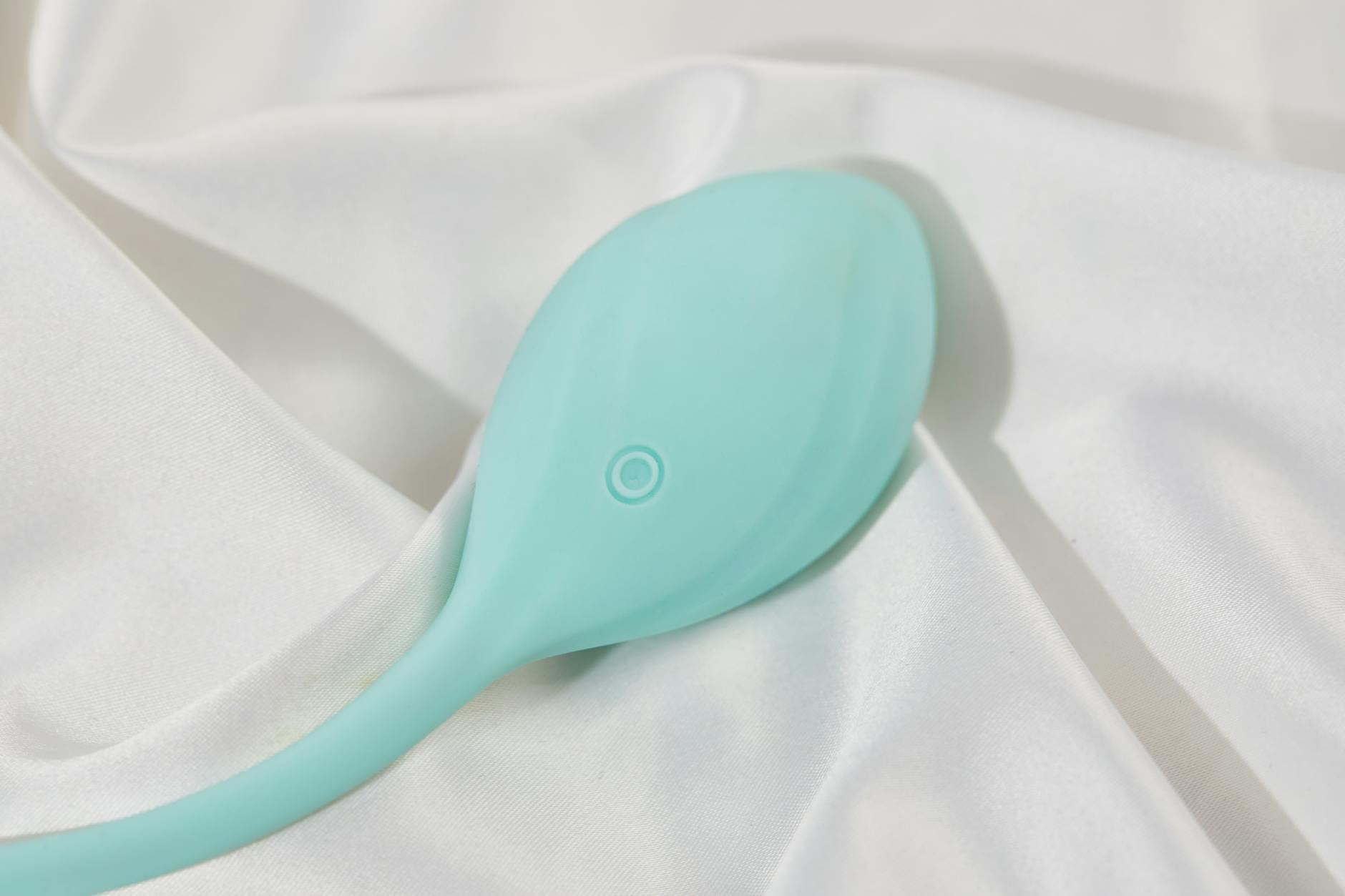
Photo by IFONNX Toys on Pexels
Three conversations you might need to have
Conversation 1: "This isn't about you." If your partner thinks your low desire means you're not attracted to them, you need to separate that lie from the truth early. Low libido is almost never about your partner's attractiveness. It's about stress, hormones, disconnection, or responsiveness. Say that explicitly.
Conversation 2: "I want to explore this differently." Introduce the idea of trying something new without framing it as "I'm broken, fix me." Frame it as "I want to find out what actually feels good to me, and I'd like your support in that." That's collaborative, not defensive.
Conversation 3: "Can we slow down?" If pressure is part of the problem, you might ask for a break from partnered sex while you rebuild desire on your own terms. That sounds risky, but it often lowers the anxiety enough that desire can return naturally. Some couples find that a week or two of focusing on solo exploration and non-sexual intimacy resets the whole dynamic.
How to actually use a lemon vibrator when desire feels distant
Start small. Don't buy the fanciest toy and expect it to ignite a spark that wasn't there. The Lem is excellent, but it's also $89. Start with knowing what you actually like stimulation-wise.
Then, when you do use it, don't set an outcome expectation. You're not trying to have an orgasm. You're not trying to prove you can be a good partner. You're just seeing what this feels like. Pressure kills arousal every time. Curiosity builds it.
If you have a partner, ask them to be patient with you learning this. Ask them not to make it about them. Ask them to understand that your pleasure is not a performance review of your relationship.
And if you're the higher-desire partner reading this: your person returning to pleasure is a better outcome than them grudgingly having sex they don't want. A lemon vibrator isn't a workaround for real intimacy. It's a tool that sometimes makes space for real intimacy to happen.
When low desire signals something medical
If your libido dropped suddenly, or if it's accompanied by fatigue, mood changes, or physical pain, see a doctor before you do anything else. Low desire can signal thyroid issues, hormonal imbalance, depression, or medication side effects. None of those things are fixed by a better vibrator.
A good GP or gynecologist should ask about your desire as part of routine care. If they don't, bring it up. It matters.
FAQ
Can using a lemon vibrator alone actually help if the real problem is my relationship?
Partially. A toy can help you reconnect with your own pleasure, which sometimes reminds you why you want sex at all. But if the relationship problem is serious (chronic criticism, infidelity, emotional distance), the toy is a band-aid. You likely need couples therapy first. That said, sometimes the conversation that happens because you introduced something new does lead somewhere real.
What if my partner feels threatened by the vibrator?
That's worth exploring. Some partners feel like a toy means they're not enough, or that you're choosing a device over them. That's insecurity talking, and it needs a conversation. Explain that the vibrator isn't replacing them. It's lowering your barrier to wanting them. If they're still uncomfortable, can you use it when you're alone? Can you use it with them in the room so they see it's not about excluding them? If they refuse to budge, that rigidity might be part of the desire problem.
How long does it take for desire to come back?
It depends what killed it. If it's stress, sometimes weeks. If it's relationship disconnection, it might take months of real conversation and reconnection. If it's medical, it depends on treating the underlying issue. A lemon vibrator can accelerate the process, but it's not magic. You're looking at a minimum of four to eight weeks of consistent exploration before you notice real change.
Is it normal to feel guilty about using a vibrator when your partner wants more sex?
Completely normal and completely worth examining. Guilt often masks shame (about pleasure, about your body, about not being enough), and shame kills desire faster than anything else. You deserve to explore your pleasure without guilt. That's not selfish. That's necessary.
Should I tell my partner I'm using a lemon vibrator, or is that private?
That's your call, but I lean toward honesty if you're in a committed relationship. Privacy and secrecy are different things. Privacy is "I'm using this tool to understand my body better." Secrecy is hiding something because you feel ashamed. If you feel you can't tell your partner, that's a sign the relationship needs work beyond toys.
What if I use the vibrator and still don't feel desire?
Then you're gathering information. You now know that the problem isn't access to novelty or better sensation. It might be deeper disconnection, a medical issue, or genuinely lower desire that's just part of who you are. All of that is data. Some people have lower baseline desire, and that's fine if everyone in the relationship understands it and is okay with it. Some people have desire that's context-dependent. The vibrator helps you figure out which one you are.
Moving forward
Desire mismatch doesn't have to end a relationship. It doesn't mean you're broken or unloving. It means you and your partner are out of sync, and sync can be rebuilt. Sometimes that's therapy. Sometimes that's having a real conversation. Sometimes that's introducing a new tool and rediscovering pleasure together. Most of the time, it's some combination of all three.
A lemon vibrator is part of that toolkit, but it's not the whole toolkit. Your willingness to explore, your partner's patience, and your commitment to reconnection matter far more than any device. The Lem just makes the exploring part less awkward.
Ready to have that conversation with yourself, or with your partner? That's the brave part. Get in touch if you want to talk through what that looks like for your specific situation.