Let's talk about the thing nobody wants to admit
Libido mismatch might be the most common relationship complaint I hear. One partner wants sex twice a week. The other wants it twice a month. One initiates constantly. The other feels touched out. One fantasizes about sex at the office. The other is thinking about tax returns. And both of them feel broken.
Here's what I tell couples: mismatched desire isn't a sign that you're incompatible. It's a sign that you need a different tool.
Why mismatched libido creates resentment (not love)
When desire doesn't align, a few predictable things happen. The higher-desire partner feels rejected repeatedly. The lower-desire partner feels pressured, guilty, and increasingly touch-averse. Both interpret it as a relationship problem when it's actually a logistics problem.
The higher-desire partner often stops initiating altogether because the shame of asking builds. The lower-desire partner over-functions in other areas (planning dates, organizing sex, sending flirty texts) trying to compensate. Neither person is actually addressing the core issue: they have different needs, and they're treating that difference like a defect in the relationship instead of a design challenge.
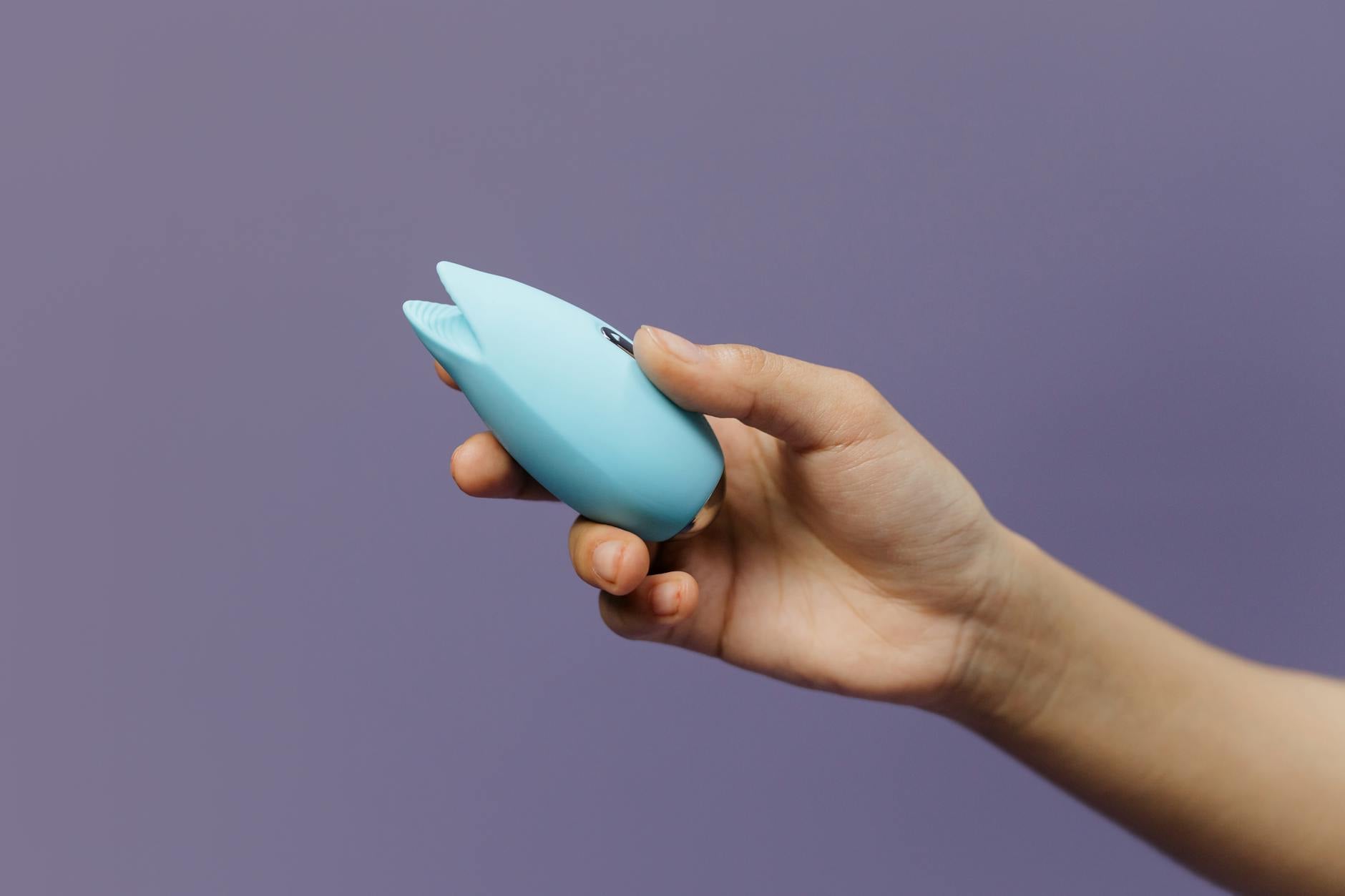
This is where lemon vibrators and clitoral toys change the conversation entirely.
How a lemon vibrator reframes the whole dynamic
A clitoral vibrator like a lemon sucker shifts the pressure off both of you. Suddenly, pleasure isn't a joint production that requires perfect timing, matching mood, and sustained energy. It becomes something either partner can access independently.
For the higher-desire partner, this is obvious relief. They get their needs met without having to negotiate or convince someone who isn't in the mood. But here's the part that surprises people: the lower-desire partner often benefits even more.
When the lower-desire partner knows their partner can self-satisfy using lemon sexual toys, the pressure lifts. Sex stops feeling like an obligation. Touch stops feeling like a precursor to a demand. Suddenly, the lower-desire partner can approach intimacy from curiosity instead of guilt. They might actually want sex more often simply because it's no longer weaponized.
The three ways lemon clitoral vibrators bridge the gap
1. Solo satisfaction removes the scorekeeping. The higher-desire partner isn't keeping a mental tally of rejections. The lower-desire partner isn't bracing for a proposition. Both people relax into the relationship instead of performing it.
2. Solo exploration can actually increase mutual desire. When someone regularly uses a lemon vibrator alone, they learn their own body better. They understand what builds arousal, what sustains it, what patterns work. That knowledge transfers into partnered sex. They're more responsive, more present, more capable of reaching orgasm. Sex becomes better for both of you, which sometimes actually increases how often the lower-desire partner wants it.
3. Toys become part of partnered play, not just solo backup. This is the move most couples miss. Once everyone's comfortable with lemon adult toys existing in the bedroom, they stop being a workaround. They become an actual feature of sex. The higher-desire partner can use a lemon sucker while inside a partner or during oral sex. The lower-desire partner can use one while their partner does something else. Penetration and stimulation happen simultaneously instead of sequentially. Sex is faster, easier, more satisfying for both people.
The conversation you actually need to have
Honestly though, the tool is only half the work. The actual conversation matters more.
Most couples never actually discuss mismatched libido directly. They hint around it. They get defensive. They blame hormones or stress or attraction. But they don't sit down and say: "Your need for sex is valid. My need for space is valid. We need a system that honors both of those things."
That conversation might sound like this:
"I've noticed we have different needs around sex. I want us both to feel satisfied and not guilty about that difference. Would you be open to exploring ways we could each meet our own needs without pressure on the other person?"
Then listen. Don't pitch solutions. Don't defend. Just listen to what your partner actually wants.
From there, you can introduce lemon vibrators as part of the solution, not as a replacement for partnered intimacy. The frame is: "I want you to feel good. I also want to feel good. Maybe we can use toys so we're both taking care of ourselves and each other."
When to use lemon vibrators together (and when to use them alone)
Here's a practical timeline that works for most couples adjusting to mismatched desire:
Week 1-2: Solo exploration only. Each person gets comfortable with their own pleasure. No performance. No observation. Just private time to figure out what feels good.
Week 3-4: Parallel play. You're in the same room, doing your own thing. Maybe you're watching each other. Maybe you're not. This is lower pressure than partnered sex because nobody has to perform. Orgasm is just a bonus, not the goal.
Week 5+: Integration. Now you're playing together. The higher-desire partner might use a lemon vibrator during oral sex. The lower-desire partner might use one while their partner is inside them. You're building a sexual rhythm that works for both your bodies.
This progression usually takes a month. During that time, something interesting happens. The pressure lifts so much that people often naturally want each other more. Not because they're forcing themselves. Because they're actually enjoying it.
The emotional part that actually matters
Using a lemon clitoral vibrator in your relationship is a practical solution to a logistics problem. But the emotional shift is the real work.
When you use toys as a bridge instead of a workaround, you're communicating something specific to your partner: "Your pleasure matters to me. My pleasure matters to me. And we can both have that without competing." That message softens a lot of defensiveness.
The lower-desire partner hears: "I'm not going to pressure you into something you don't want." The higher-desire partner hears: "I actually care about your satisfaction, even when I'm not in the mood for sex." Both people relax.
This is especially important if there's been resentment building. Toys aren't going to fix a fundamentally broken relationship. But they can take the pressure off enough that you can actually talk about the real issue. And sometimes, the real issue is just that everyone's stressed and the sex had become another obligation instead of a pleasure.
FAQ: Mismatched libido and lemon vibrators
Will using toys make my partner less interested in sex with me?
No. The opposite actually happens in most cases. When someone's baseline sexual tension is managed through solo play, they're more present and interested when they do have partnered sex. They're not desperate. They're choosing it.
What if my partner is uncomfortable with toys in the bedroom?
That's important information. Ask why. Is it insecurity? Is it about control? Is it genuinely not appealing? Each reason needs a different conversation. Sometimes it's about reframing toys as enhancers, not replacements. Sometimes it takes time. Sometimes you need to explore solo first and let them see how much it actually improves your mood and your sex life together.
Can we use lemon vibrators if we have very different comfort levels with pleasure?
Absolutely. In fact, that's exactly when they help. One partner can explore solo at their own pace. The other partner can use toys whenever they want. There's no pressure to match each other's timeline. Everyone moves at their own speed.
Is it selfish to want more sex than my partner?
No. Is it selfish for your partner to want less? Also no. Wanting different amounts of sex isn't a character flaw in either person. It's just a mismatch in need. Lemon sexual toys help you both get what you need without resenting each other for it.
What if the problem isn't libido but attraction?
Then toys are a short-term help, not a long-term fix. If the real issue is that you're not attracted to your partner anymore, that's a separate conversation that might need a couples therapist. Toys can improve sex while you're working on the deeper stuff. But they can't create attraction that isn't there.
How do I bring up using a lemon vibrator with my partner without it feeling awkward?
Start with honesty, not suggestion. "I've been thinking about how we could both feel more satisfied" is better than "I want to use a vibrator." Lead with the problem you're trying to solve, not the solution. Then explore solutions together. Sometimes your partner will suggest toys before you do.
The real win
Mismatched libido stops being a relationship problem when you stop treating it like one partner is broken. A lemon clitoral vibrator isn't a Band-Aid. It's a recognition that you're two people with different desires, and both desires matter.
Using lemon vibrators together means you're building a sex life that actually fits your real lives. Not some idealized version where you both want sex at the exact same time. But an actual rhythm that works for two actual humans with different needs.
That shift. That's where the real intimacy happens.