Let's be real about what stress does to desire
Relationship conflict doesn't just hurt your feelings. It shuts down arousal at a physiological level. When you're holding tension with a partner, your nervous system stays in fight-or-flight mode. That's the opposite of the relaxed, open state your body needs for pleasure to show up. You're not broken. You're not frigid. You're just nervous.
This is one of the most common patterns I see in couples work. One partner withdraws sexually, the other feels rejected, the dynamic spirals, and suddenly both people are convinced there's nothing left to salvage. What they actually need is a way to separate the pleasure conversation from the conflict conversation.
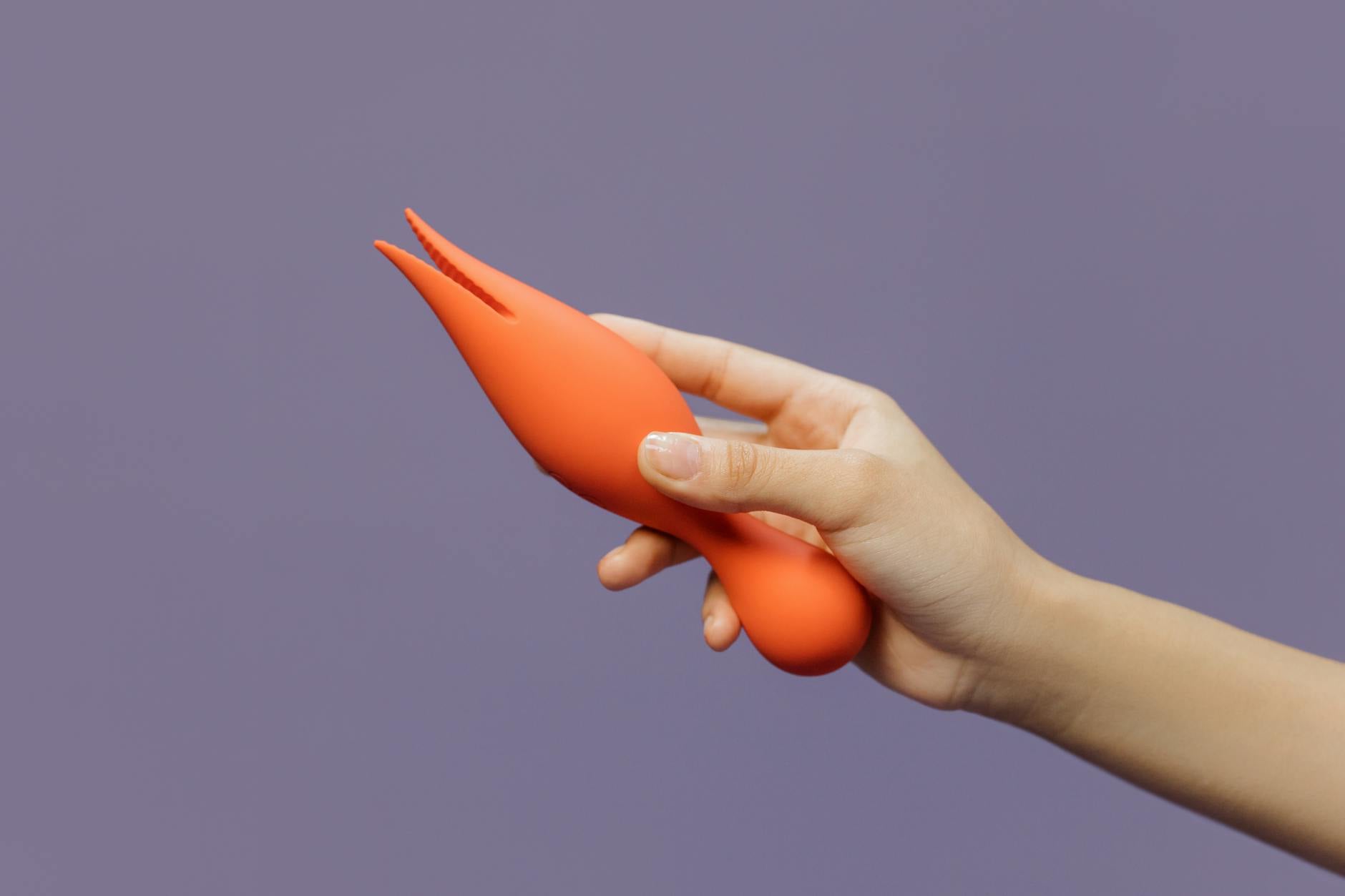
Lemon vibrators, specifically clitoral suction toys like the lemon clitoral vibrator, are unusually useful here because they don't require you to be already aroused. They're tools for rebuilding sensation and pleasure when stress has flattened it.
Why your libido tanks under relationship tension
Your nervous system has two speeds: sympathetic (stressed, alert, ready to fight or flee) and parasympathetic (calm, open, ready to connect). Arousal lives in parasympathetic mode. Relationship conflict keeps you locked in sympathetic.
When you're frustrated with your partner, your body isn't withholding pleasure to punish them. It's literally unable to relax enough for arousal to build. Blood stays in your core and extremities. Your pelvic floor tightens. Lubrication slows. The whole system goes offline.
Add to that the emotional part: resentment, hurt, feeling unseen. Your brain's pleasure centers don't fire when you feel disconnected from someone. This is why solo pleasure actually becomes the entry point back to partnered sex.
Using a lemon sucker to wake up your body again
The advantage of air pulse technology in lemon vibrators is that it works without requiring a warm-up period. You don't have to already feel aroused for the sensation to register. The suction stimulates nerve endings directly, which can actually help restart your arousal circuitry when stress has dampened it.
Here's the practical approach: set aside 20-30 minutes when you're alone and your partner isn't going to interrupt. Not when you're thinking about them or the conflict. Not trying to perform a sexual response. Just time to be with your own body.
Start with the lemon clitoral vibrator on the lowest setting. Don't go in expecting an orgasm. That pressure kills the process. The goal is sensation without agenda. Spend 5-10 minutes just feeling how the suction feels against different parts of your clitoris. Move it around. Notice where it feels good. This sounds basic, but most people skip this and go straight to intensity.
Stress has probably made you numb to subtle sensation. Rebuilding that sensitivity is how you rebuild desire.
The psychological shift that matters more than the toy
Here's the tricky part: using a lemon vibrator when your sex drive is low isn't really about the vibrator. It's about what you're signaling to yourself.
You're saying: "My pleasure matters independently of this relationship." You're saying: "I can feel good in my own body even when things are tense." You're saying: "I don't need this to be fixed instantly to deserve pleasure right now."
That last part is critical. Most people approach low libido like it's a problem to solve before they can enjoy anything. Instead, clitoral vibrators work best when you use them to practice pleasure while the problem still exists. That rewires your nervous system away from the idea that sex requires everything to be perfect first.
Manypeople also carry guilt about solo pleasure when things are bad with a partner. That guilt gets in the way. Here's what I tell couples: exploring your own pleasure isn't cheating on your relationship. It's not a betrayal. It's actually one of the most direct routes back to partnered sex because you're not asking your partner to fix something they might feel responsible for.
What changes in your body when you restart arousal
Two things happen after a few weeks of using lemon sexual toys, even solo.
First, your baseline arousal capacity comes back online. Your clitoris becomes more responsive. You start noticing earlier signs of arousal in daily life. Something your partner does or says starts registering as attractive again, not because the conflict went away, but because your nervous system learned how to downshift from stress mode.
Second, you get data. You learn what actually works for your body right now. Some people find they need longer warm-up. Some discover they need more sustained pressure than they expected. Some realize they've been ignoring their own signals all along. That information is gold when you eventually bring it back to partnered sex.
Bringing the reconnection back to your partner
The conversation with your partner about this doesn't need to be elaborate. You don't have to say "I've been masturbating with a lemon vibrator." If you want to, great. If you'd rather keep it private, that's equally valid.
What matters is the parallel conversation: what needs to shift in the relationship so you both feel safer and more connected. Low desire after conflict is your nervous system asking for something. Usually it's more attention, more gentleness, more honesty, more space. Figure out what it is.
As that shifts, your interest in partnered sex often returns naturally. Sometimes faster than you'd expect. The nervous system is responsive that way.
One practical thing: when you do restart partnered sex, use what you've learned solo. If the lemon clitoral vibrator worked well alone, bring it into partnered time too. Many partners find that integrating a vibrator takes pressure off them (no longer solely responsible for your arousal) and allows for different kinds of pleasure.
When low desire is a bigger red flag
Sometimes low libido after relationship stress is straightforward. Sometimes it's pointing at something bigger: a fundamental incompatibility, untreated anxiety, past trauma, or a relationship that isn't healthy to stay in.
If you've been using lemon vibrators solo for a few months, rebuilding your comfort with sensation, and you still have zero interest in your partner or sex in general, that's worth taking seriously. Talk to a therapist. Couples work might help, or it might clarify that the relationship isn't right for you. Both are valid outcomes.
The point of using a clitoral vibrator during relationship stress isn't to force yourself to want sex with someone you're not sure about. It's to understand what your body actually wants when you take the relationship pressure off.
The recovery timeline is slower than you think
Rebuild arousal doesn't happen in a week. Most people need 4-8 weeks of consistent solo pleasure before they notice real shifts in their partnered desire. That sounds long, but it's actually fast given that stress-induced low libido can take months to develop.
Use the lemon sexual toys 2-3 times per week. Not as homework. Not as proof you're "fixing" yourself. As genuine pleasure. Some sessions will be better than others. Some will feel neutral. That's normal.
Keep going anyway. Your nervous system is learning that pleasure is still possible even when things are complicated. That's the shift that eventually brings your desire back.
People also ask
Can you use a lemon vibrator if you have zero arousal right now?
Yes. That's actually when lemon clitoral vibrators are most useful. Unlike traditional vibrators, air pulse toys don't require you to already be aroused to work. The suction stimulates nerve endings directly. You can start on the lowest setting and build from there, or stay at low intensity the whole time. There's no requirement to feel turned on for the physical sensation to register.
How often should you use a clitoral vibrator when rebuilding desire after stress?
Aim for 2-3 times per week. That's frequent enough to start rewiring your nervous system without the pressure of "I have to use this every day." Think of it like physical therapy for arousal. Consistency matters more than intensity. Some sessions will feel amazing, others will feel mechanical. Both are progress.
Does using a lemon sucker alone make partnered sex harder to enjoy?
Not at all. Some partners worry that vibrators will make them feel less necessary, but the opposite usually happens. When someone knows their own pleasure, they're often more relaxed and present during sex with a partner. They're not performing. They're not waiting to be rescued. That actually makes partnered sex better, not worse.
Can you talk to your partner about using lemon sexual toys for low desire?
You absolutely can, and many couples find it helpful. You might say something like: "I've been feeling disconnected and my sex drive is low. I want to rebuild my own arousal so we can reconnect. I'm going to explore solo for a while." Some partners want to participate. Some want to know nothing. Both are fine. What matters is that you're not hiding it and you're not asking permission to take care of yourself.
Will using a lemon clitoral vibrator fix your relationship?
No. A vibrator is a tool for rebuilding your own pleasure and nervous system regulation. The relationship issues need separate attention, usually with a therapist or couples counselor. What a vibrator does is give you access to pleasure and calm even while the relationship stuff is being worked on. That's genuinely valuable, but it's not a substitute for dealing with the actual conflict.
How do you know if your low desire is fixable or a sign to leave?
If you're using a vibrator solo regularly and starting to feel more aroused in daily life, but you still feel repelled by your partner or sex with them specifically, that's data. It suggests the relationship dynamic itself is the problem, not your capacity for desire. That's a conversation for therapy, alone or as a couple. Sometimes the answer is "this relationship isn't right," and that's okay.