Let's be honest about postpartum sex
After you give birth, sex can hurt. This is not weakness, not broken tissue, and definitely not something you need to just push through. The pain is a signal. Your body is telling you it's not ready yet. Or it's ready but needs a completely different kind of touch.
Here's what most people don't know: pain during sex after childbirth doesn't mean you're done with pleasure. It means friction and pressure aren't your friends right now. That's where lemon vibrators change everything.
What's actually happening in your body
After birth, your vulva, perineum, and vaginal tissue need time to heal. Whether you had a vaginal delivery with tearing, an episiotomy, or a C-section, the surrounding tissue is sensitive and inflamed for weeks or months. Even if there's no wound, the hormonal shift after birth (especially if you're breastfeeding) tanks your estrogen, which thins vaginal tissue and reduces natural lubrication.
That combination means traditional vibrators, which rely on rapid vibration or pressure, often feel like friction instead of pleasure. They can irritate healing tissue or feel too intense on skin that's already raw.
Lemon clitoral vibrators work differently. They use suction and gentle stimulation instead of direct friction. The suction pattern mimics a rhythm your body recognizes without creating pressure or abrading tissue. No grinding. No intensity you're not ready for yet.
The first question: Is it safe yet?
Most doctors clear you for penetrative sex around six weeks postpartum. But clearance doesn't mean comfort. And solo pleasure? That's different. You're in control of pressure, speed, and sensation. Most people can begin exploring gentle clitoral stimulation within two to four weeks, especially with a tool designed for sensitivity.
Start with a simple check: Can you touch the area without wincing? If yes, gentle suction-based stimulation is usually tolerable. If touching the area still causes sharp pain, wait another week or two. There's no race.
Why lemon vibrators work better for postpartum bodies
Three reasons this design matters after birth:
Suction doesn't irritate. A lemon sucker uses air-pulse technology, which creates gentle suction rather than vibration. This stimulates without friction. Your healing tissue stays protected.
You control the intensity. Most lemon vibrators start at low settings and build. After birth, you're probably more sensitive than usual. You need that flexibility. With each session, you can stay at whatever level feels good.
It rebuilds sensation slowly. Postpartum bodies can feel numb in some places and hypersensitive in others. The gentle, rhythmic suction helps your nervous system recalibrate without overwhelming it. You're not forcing pleasure back. You're coaxing it.

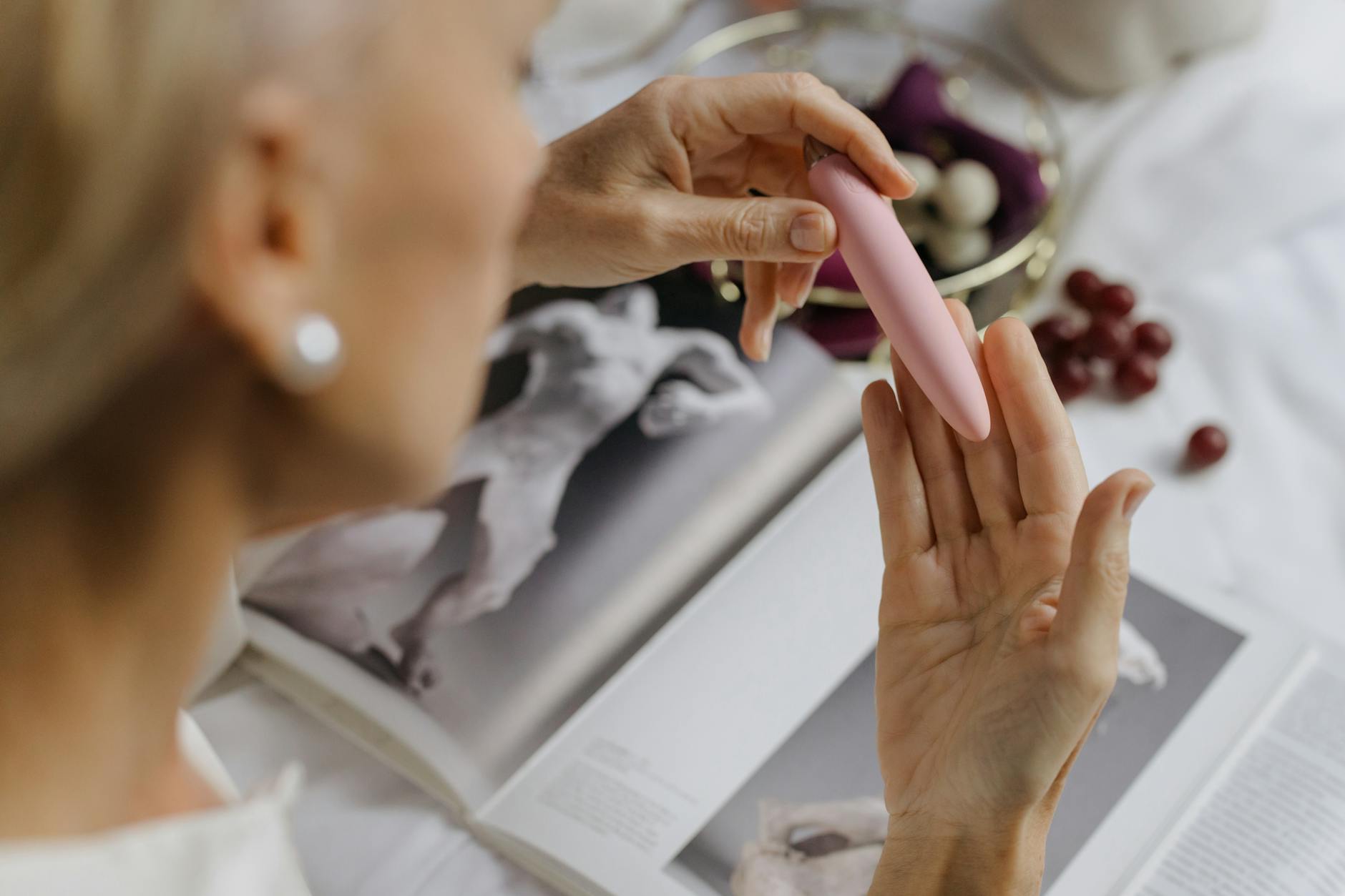
Photo by cottonbro studio on Pexels
How to actually use one after childbirth
Week 1-2: If you're feeling ready, try just holding the lemon vibrator against the area (not inside). Don't turn it on. Get used to the sensation of it there. This sounds boring, but your body is relearning what pleasure feels like in a new postpartum state. Boring is good.
Week 3-4: Turn it on at the lowest setting. Twenty to thirty seconds max. Notice what happens. Does it feel good? Uncomfortable? Numb? Your only job is observation, not outcome.
Week 5+: Once you've cleared with your doctor and you know your pain baseline, use the lowest setting for a few minutes. Don't rush toward orgasm. The goal right now is sensation, not performance. If orgasm happens, great. If it doesn't, also fine.
Timing matters. Use a lemon clitoral vibrator when you're alone and have no time pressure. Your nervous system is already overwhelmed from sleep deprivation and hormonal shifts. You don't need the added stress of a partner waiting or the clock ticking.
Lubrication is your friend. Even though you're only using external suction, a little water-based lubricant can make the sensation feel less raw. It's not a sign of failure. It's smart healing.
The mental piece you can't skip
Honestly? The physical pain is only half the problem. After childbirth, your body feels like it belongs to everyone else. The baby needs you constantly. If you have a partner, they want things to get back to "normal." Your own pleasure often feels like the last priority. Then you try to want sex again and nothing happens.
That's not dysfunction. That's a reasonable response to unreasonable circumstances.
Using a lemon vibrator solo is an act of reclaiming your body as yours. Not for baby. Not for partner. For you. Even fifteen minutes is resistance. Even if it doesn't lead to orgasm, it's you saying: "My pleasure still matters." That mindset shift is half the healing.
If you have a partner, this is worth a conversation. Something like: "I'm starting to explore pleasure again. I need to do this alone for now. I'm not ready for partnered sex yet, and that's separate from how I feel about you." Most partners who hear that understand. The ones who don't need a different kind of conversation entirely.
When you're ready to include a partner
Eventually, most people want partnered sex again. When that time comes, you still need a different approach than before birth.
You might use a lemon vibrator together, which takes pressure off your body and puts it on a device you both control. You might use it on yourself while they do something else. You might try positions that don't involve deep penetration yet, paired with external stimulation from the vibrator.
The key: Postpartum sex shouldn't be about getting back to what it was. It should be about discovering what it wants to become. That almost always requires more communication and more flexibility than prepregnancy sex. A good partner is into that experiment.
What if pain persists?
If you're three months out and sex or any penetration still causes sharp pain, see a pelvic floor physical therapist. Pain during sex after childbirth is common, but it's not something you should live with forever. A specialist can identify whether it's scar tissue, pelvic floor tightness, or something else, and actually fix it.
In the meantime, lemon vibrators let you access pleasure while you're healing. They're not a replacement for treatment. They're a bridge. You get to feel like yourself again while your body finishes mending.
People also ask
When is it safe to use a lemon vibrator after giving birth? Most people can start gentle external stimulation around two to four weeks postpartum, once any intense bleeding or severe pain has passed. Check with your doctor if you had complications. Your body will tell you if you're pushing too hard.
Can lemon vibrators help with postpartum numbness? Yes. After birth, many people experience reduced sensation in the vulva and surrounding area. The gentle, consistent suction from a lemon sucker helps retrain your nervous system and rebuild sensation gradually. Numbness often resolves within a few weeks of regular gentle use.
Is a lemon vibrator better than other toys for postpartum sex? For immediate postpartum healing, suction-based vibrators are often gentler than traditional vibrators or wands because they don't rely on friction. That said, individual sensitivity varies. Start low, pay attention to how your body responds, and adjust accordingly.
Can I use lemon vibrators if I had a C-section? Yes. C-section recovery doesn't affect the vulva or vaginal tissue in the same way vaginal birth does, but the hormonal and emotional shifts are similar. If you feel ready and your incision is healed (usually around 4-6 weeks), a lemon vibrator is still a good choice for gentle pleasure exploration.
What if my partner wants sex before I'm ready? That's a conversation worth having early and directly. You might say: "My body needs more time. That's not about you. Here's what I do need right now." If your partner can't accept that boundary, the problem isn't your healing. It's the relationship.
Should I use lube with a lemon vibrator postpartum? Water-based lubricant is fine and often helpful. It reduces any raw sensation on sensitive tissue. Avoid anything with irritants or fragrance. Keep it simple.
You get to rebuild this at your pace
Postpartum sex pain is temporary, but it feels permanent when you're in it. Using a lemon vibrator isn't about forcing yourself back to "normal." It's about giving yourself permission to explore pleasure on your timeline, in your way, with a tool that actually respects what your body needs right now.
Your pleasure matters. So does your healing. The best part? They don't have to compete. A lemon clitoral vibrator lets you have both.
If you're ready to start exploring, you already know what you need. If you're not ready yet, that's wisdom, not failure. Either way, your body will tell you when it's time. Listen to it.
Have questions about getting started or navigating postpartum pleasure? Reach out anytime. That's what we're here for.