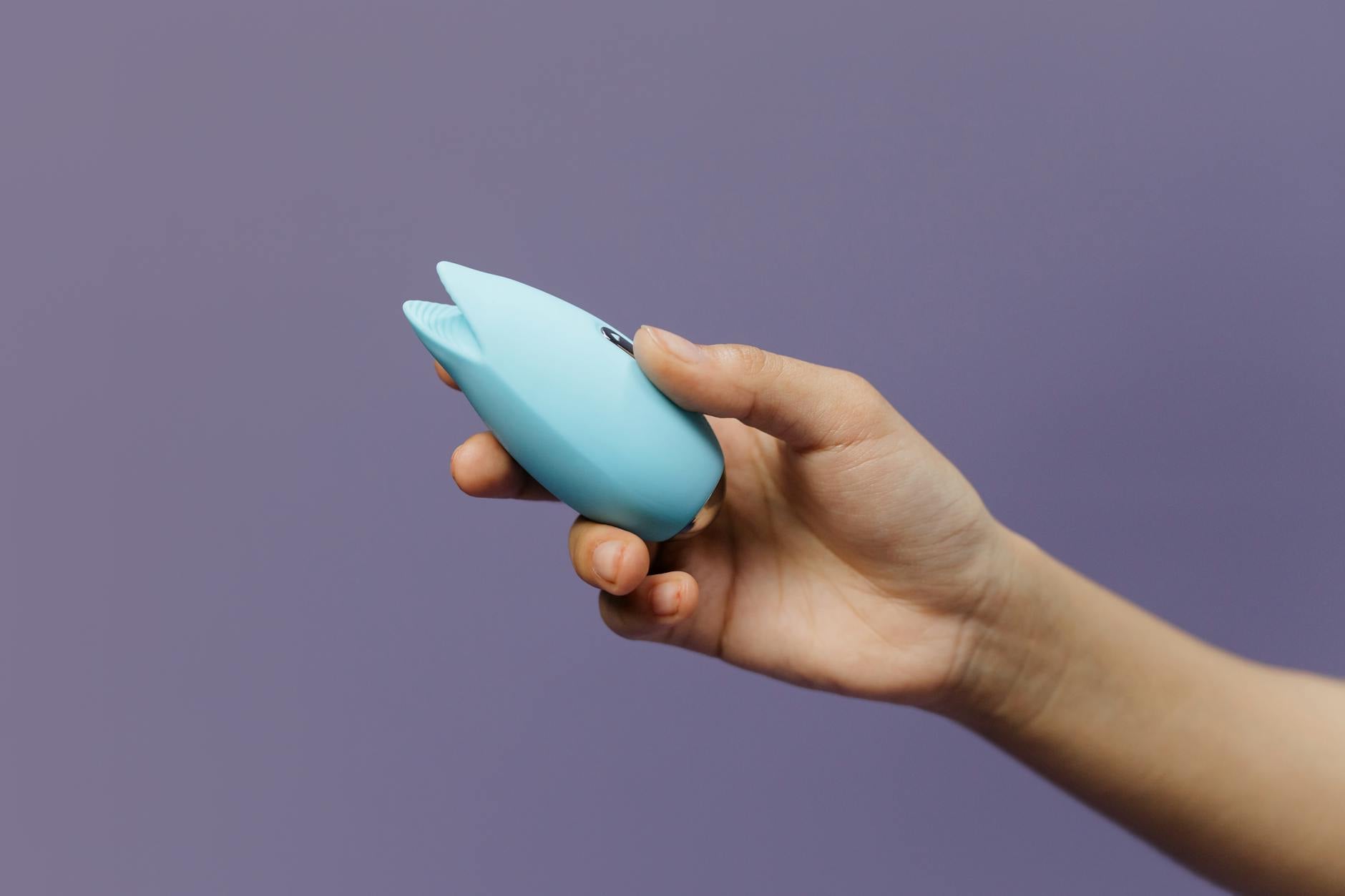
Let's talk about why the wrong vibrator feels completely wrong
Here's the thing nobody tells you when you're shopping for a lemon clitoral vibrator: sensitivity isn't static. It's not a fixed trait you're born with and keep forever. Your clitoris responds differently depending on where you are in your cycle, stress levels, whether you've had coffee, how relaxed your pelvic floor is, and honestly, what time of day it is. This is why "the best vibrator" doesn't exist. What matters is finding the vibrator that works for your actual body, right now.
I've worked with couples for decades, and one of the clearest patterns I see is that people buy a vibrator based on a review or recommendation, use it twice, find it either too intense or too gentle, and then it sits in a drawer. That's not a vibrator problem. That's a mismatch problem. And it's completely fixable.
Why clitoral sensitivity varies so much
Your clitoris has about 8,000 nerve endings concentrated in a tiny area. That density is why clitoral stimulation feels so different from other kinds of touch. But here's what changes that sensitivity: hormones, blood flow, arousal level, stress, and even how much attention you've been paying to that area recently.
During the follicular phase of your cycle, higher estrogen makes tissues more sensitive to lighter touch. In the luteal phase, progesterone can make you crave more direct, sustained pressure. If you're stressed or haven't had an orgasm in a while, your clitoris might need more intensity to wake up. If you've just had multiple orgasms, it might need a break or gentler touch. These aren't problems. They're just data about what your body needs today.
The other variable people don't talk about enough: familiarity. When you first start using a lemon clitoral vibrator, the sensation feels intense because it's new. After a few sessions, your nervous system calibrates. What felt overwhelming might feel perfect. Or it might still feel too much. Knowing the difference between "too intense because it's new" and "too intense because it's actually not right for me" takes one or two honest uses.
Understanding vibration patterns and why they matter
Lemon vibrators come with different pattern options, and this is where a lot of people get confused. The patterns aren't just there to be fancy. They actually change how your body responds.
Pulse patterns and steady vibration feel completely different. A steady, continuous buzz builds arousal gradually. It's predictable, which your nervous system can relax into. Pulse patterns interrupt that steady state. They create little peaks of stimulation. Some people find pulses wildly exciting. Others find them distracting. Neither is wrong. They're just different languages your clitoris might or might not speak.
Start with a lemon clitoral vibrator on its gentlest pattern first. Not because you're worried you can't handle more, but because you're gathering information. If the gentlest setting feels boring after a solid minute or two of exploration, you now know you need more intensity. If it feels too much, you know you need even less. If it feels perfect, you've found your baseline. Most people have a baseline pattern they return to 70 percent of the time, then experiment with others depending on mood or day.
Intensity levels and how to actually test them
Here's where I see the biggest mismatch happen. Someone reads that a toy has "multiple intensity levels" and assumes more levels equals better. Not necessarily. What matters is whether the intensity range works for you.
If you're someone whose clitoris needs direct, focused pressure, a toy with gentle levels might frustrate you because even the "strongest" setting feels too subtle. If you're sensitive to vibration and tend to tense up under pressure, a toy that only goes to moderately intense might be perfect, while an ultra-powerful toy could be overwhelming no matter what.
When you're testing a new lemon vibrator, give yourself permission to use it alone first, without expectation of orgasm. That's the truest test. You're not trying to reach a goal. You're just noticing: Does this feel good? Where? Does it build, or does it plateau? Do I want to change the pattern? Am I tensing up? After a few solo sessions, you have real data about whether this particular toy matches your sensitivity.
Materials and why they change the sensation
Lemon vibrators are typically made from silicone, and that choice matters. Silicone is body-safe, easy to clean, and holds heat in a way that creates a more organic feeling than plastic or glass. But silicone itself can vary. Some silicone is firmer and more rigid. Some is softer and more flexible. A toy with a softer silicone tip might feel gentler on sensitive tissue. A firmer toy directs the vibration more intensely into a smaller area.
This is another place where "better" is subjective. Someone who's been using toys for years might prefer the direct intensity of a firmer toy. Someone new to vibrators or with very sensitive tissue might prefer softer silicone that spreads the sensation across a wider area.
If you're starting out or you're sensitive, pay attention to the material description. If a toy is designed with a softer tip, that's usually intentional. It's not a compromise. It's a feature.
The shape and design question
Lemon clitoral vibrators come in different shapes, and this is more important than people realize. A broader, flatter head distributes vibration across a wider surface. A more pointed or contoured head concentrates it in a specific spot. A suction-style toy like the lemon vibrator uses air-pulse technology instead of traditional vibration, which creates a completely different sensation. completely different sensation.
If you're someone who likes targeted, intense stimulation, a more pointed toy or a suction-style design might be perfect. If you prefer broader, more diffuse pleasure, a toy with a wider contact surface is probably better. Again, neither is superior. They're just different tools for different sensations.
How to know if you need a powerful toy versus a gentle one
Here's a practical test: When you're already aroused and using your hands or a partner's hands, what kind of touch brings you closest to orgasm? Do you need firm, direct pressure? Do you want light, teasing touch? Is it somewhere in between? That answer tells you a lot about what intensity range in a lemon vibrator will probably work.
But also know that vibration can feel different from manual touch. Some people who need firm manual pressure actually prefer gentler vibration because the speed compensates. You really do need to test.
One more thing: if you're someone who tends to reconnect with your body after hormonal shifts, sensitivity is genuinely reset territory. Tissue changes, nerve responsiveness changes, what felt perfect six months ago might not feel the same now. That's not failure. That's information. It just means you might need a different tool now than you did before.
Starting with a mid-range toy, not an extreme
My advice: if you're new to lemon vibrators or you're uncertain about your sensitivity, start with a mid-range option. Something that has multiple intensity levels and a few different patterns, but isn't positioned as "ultra-powerful" or "for beginners only." The lemon clitoral vibrator is actually designed for this sweet spot. It's not the gentlest option available, but it's not extreme either. It's the tool that teaches you what you actually like.
Use it for a couple of solo sessions. Notice what feels good. Then, if you want to explore further, you have real data about whether you need to go gentler, more intense, or just different.
Common sensitivity scenarios and what usually works
If you find manual touch numbing after a few minutes, you probably need vibration on the stronger side. If direct touch feels immediately uncomfortable, you might prefer a toy with a broader head or lower intensity levels. If you've never had an orgasm or it's been really hard to reach, you might actually need more intensity than you think, not less, because your body hasn't learned the pathway yet.
If you want more intense sensations with less pressure, suction-style toys deliver that. They create intense sensation without the grinding pressure of traditional vibration. If you want the opposite, steady patterns at mid-intensity from a traditional vibrator might be your home base.
The key pattern: notice, don't assume. Your sensitivity right now is valid data. It might change. That's okay too.
When to revisit your choice
You don't have to marry your first vibrator forever. If you give a toy three or four solid solo sessions and it still doesn't feel right, that's real information. It might not be the right match. But also know that sometimes a toy feels better after your nervous system settles into it, or once you're more aroused, or once you've figured out which patterns actually work for you. Give yourself that grace period.
Frequently asked questions about choosing a lemon vibrator
Does a more powerful vibrator always feel better?
No. More power just means more intensity. If your clitoris prefers gentle, consistent stimulation, a gentler vibrator at the right pattern will feel infinitely better than an ultra-powerful toy that overwhelms you. Pleasure isn't about maximum intensity. It's about the right intensity for your body.
Can my sensitivity change over time?
Absolutely. Hormones, age, stress, relationship changes, medication, and how recently you've been sexually active all shift what your clitoris responds to. Something that felt perfect a year ago might feel different now. That's normal. It just means you might want to revisit which toy serves you best.
What if I'm sensitive but I want intense sensation?
Try a suction-style toy like the lemon vibrator. It delivers intense sensation through air-pulse technology rather than direct vibration, which can feel intense without the pressure that might be uncomfortable for sensitive tissue. You get stimulation without grinding.
Should I test a vibrator in the store?
Not always practical, and usually not possible. What you can do is buy from a brand with a solid return policy, use it a few times at home, and return it guilt-free if it's not right. That's way better than forcing yourself to use a toy that doesn't work just because you paid for it.
Is it normal to need a different vibrator for different days?
Completely normal. Some days your clitoris wants gentle and teasing. Other days it wants direct intensity. Some people have multiple toys for different moods, and that's not excessive. That's just knowing yourself. Though if you're starting out, one good mid-range vibrator is the best foundation.
How do I know if I'm too sensitive or not sensitive enough?
There's no "right" amount of sensitivity. There's only what works for your body. If you're struggling to find a toy that feels good, talk to a partner about introducing toys together, try different patterns and intensities methodically, or honestly consider whether stress, hormones, or relationship dynamics are affecting your responsiveness. Sometimes the issue isn't the toy. Sometimes it's the context.
Can I use the same vibrator for different types of stimulation?
Yes. A lemon clitoral vibrator works for external stimulation, blended touch with a partner, and solo pleasure. The patterns and intensity you prefer might shift depending on the context, but the same toy can be flexible across different scenarios.
The real truth about sensitivity and vibrators
Your clitoris isn't broken if it needs more intensity than you expected. It's not overly sensitive if it needs less. Choosing the right lemon clitoral vibrator isn't about finding the "best" toy. It's about finding the toy that matches what your actual body needs right now. That requires a little honest exploration and permission to trust what you learn about yourself in the process. Start there, and everything else follows.