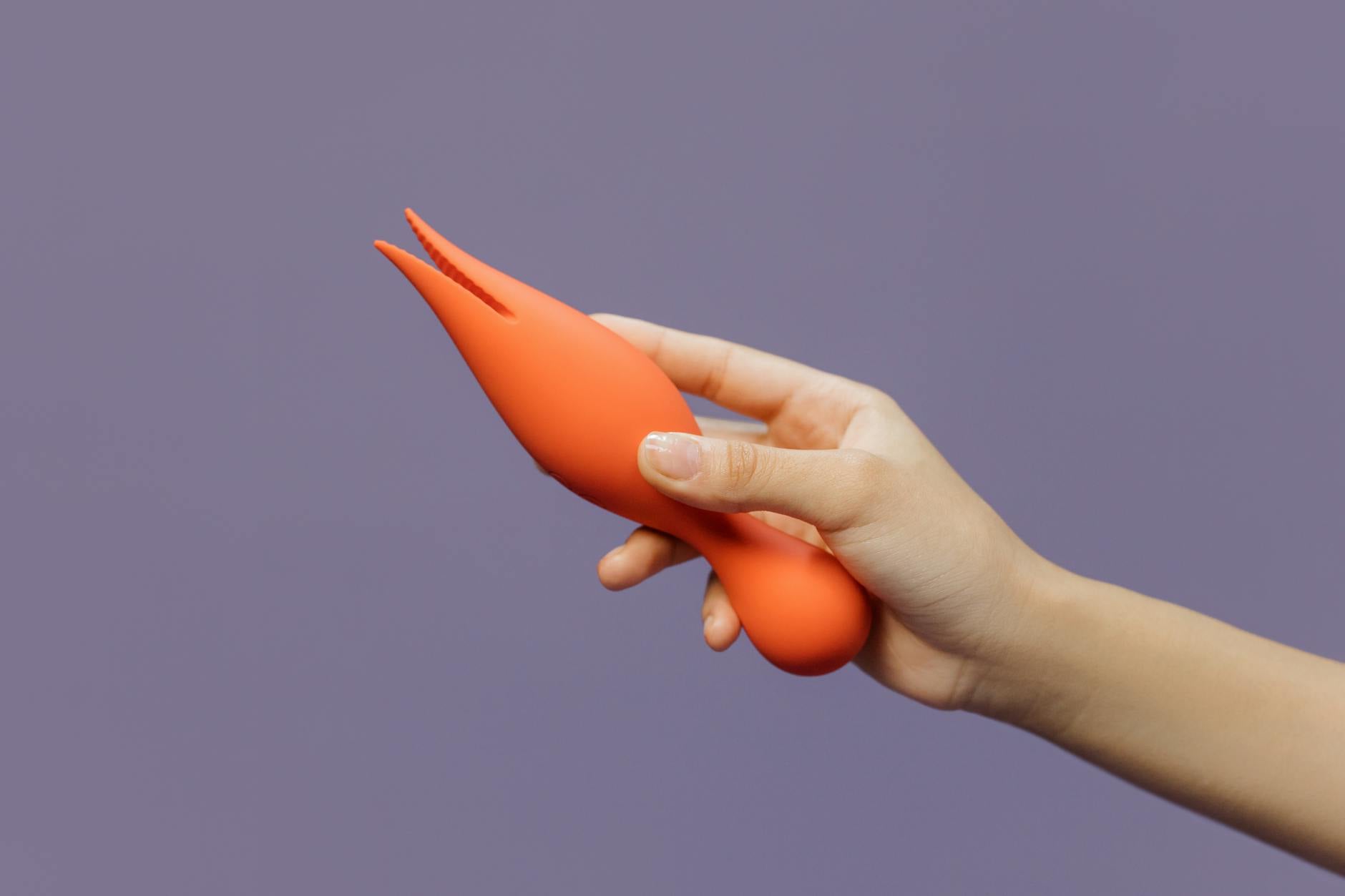
What actually happens when you use the same vibrator for years
Honestly, this is one of the most common questions I hear, and it's usually wrapped in shame. "Am I broken?" "Is my body just tired?" No. What's happening is textbook neuroscience, not a personal failure.
When you use the same pattern and intensity for months or years, your nerve endings adapt. That buzz that felt incredible in month two barely registers in month twenty. It's called sensory accommodation. Your clitoris isn't less capable of pleasure. Your brain has just gotten used to that specific stimulus, and it stops paying attention.
Traditional vibrators use a single, repetitive motion. Most work at one frequency. Some have multiple speeds, but the speed range is usually narrow, and the sensation profile is always the same. Over time, your nervous system learns to tune it out.
Why lemon clitoral vibrators feel genuinely different
Lemon vibrators work through a completely different mechanism. They use suction and gentle pulsation rather than pure vibration. When you switch to a lemon clitoral vibrator after years of traditional vibrators, your nerve endings encounter something they haven't experienced before.
The sensation is less uniform percussion and more like rhythmic pressure combined with a lifting motion. It engages different nerve pathways in the clitoris. For many people, it feels sharper, more focused, and more intense even at lower power settings.
I've had clients who spent two years frustrated, convinced their sensitivity had permanently declined. They switched to a lemon vibrator and had an orgasm within five minutes. The difference wasn't healing. It was novelty rewiring their nervous system back to attention.
The refractory period comes back faster
One specific thing shifts when you make this transition. With traditional vibrators, many people report that the refractory period lengthens over time. You need longer breaks between orgasms, and the next one feels less intense.
With lemon vibrators, that resets for most people. Because the stimulus is different, your nervous system treats it as new. Multiple orgasms become possible again, often in quick succession. Not every time, and not for everyone, but frequently enough that it's worth mentioning.
This isn't mystical. It's the same reason a partner who changes their touch or approach often feels more stimulating than someone who's been using the exact same technique for a decade. Variation wakes up sensation.
How to actually make the switch without disappointment
Don't expect the lemon vibrator to feel amazing immediately. Your body has spent years locked into one type of stimulation. Here's what I recommend.
Week one: exploration, not performance. Use your lemon vibrator at the lowest setting for short sessions. Three to five minutes. No pressure to orgasm. Get curious about how the suction feels compared to the buzz you're used to. Some people find it takes time to trust the sensation.
Week two: extend the session. Stay at low settings. Ten to fifteen minutes. By now, your nervous system is starting to recognize this as pleasure-adjacent, not just different. Arousal builds differently with lemon vibrators. It's slower but deeper for most people.
Week three: experiment with patterns. If your lemon vibrator has multiple pulse modes, try them. The power matters less than the novelty. A mode you haven't felt before is almost always more stimulating than grinding the setting higher on something familiar.
Week four: solo and partnered. Once you feel at home with your lemon vibrator alone, introduce it to partnered play if you want. The transition back to partner touch feels different too. Many people report heightened sensation all around after a few weeks of lemon vibrator use.
What to do with your old vibrators
Don't throw them away. Keep one. Rotation is genuinely helpful. If you use the same lemon vibrator every time, you'll eventually adapt to that too. By week twelve, your nerve endings will begin to ignore it the way they ignored the traditional vibrator.
The solution isn't to keep chasing new devices. It's to rotate. Lemon vibrator for two weeks, then traditional vibrator for a week, then back. Your nervous system stays engaged because the stimulus changes.
Partners often ask whether they should switch between toys when having sex with someone. The answer is yes, for the same reason. Variation keeps sensation sharp.
The role of relaxation in the transition
Here's something people rarely talk about. When you switch from a vibrator that didn't work to one that does, your pelvic floor often relaxes in a way it hadn't before. You weren't clenching from tension. You were clenching because you were chasing a sensation that wasn't coming.
Once the sensation arrives again, that effort disappears. Your orgasms may feel different because your pelvic floor is actually relaxed for the first time in a while. Deeper. Less frantic. Some people describe it as the first time they've felt genuine pleasure in their body in years, not because their body changed, but because their nervous system finally stopped fighting for stimulation.
This is especially true for people who've been taking medications like antidepressants or blood pressure drugs that can dull sensation. The lemon clitoral vibrator often works when other vibrators don't, and the shift back to sensation includes a shift back to relaxation.
When sensation doesn't return and what to do
For some people, switching vibrators alone isn't enough. If you've been using intense traditional vibrators for very long, sometimes desensitization goes deeper than just nerve adaptation. Pelvic floor tension, hormonal shifts, or even anxiety about whether it will work can keep sensation locked down.
If you're three weeks into lemon vibrator use and still not feeling much, consider a few other variables. Are you aroused before you start? Genuine arousal, not just logistical readiness. Lemon vibrators are responsive to baseline arousal in a way traditional vibrators sometimes aren't.
You might also explore pelvic floor tension and how lemon vibrators help release it. Chronic tension can mask sensation. Or consider whether hormonal changes are at play, especially if your sensitivity dropped gradually rather than suddenly.
If none of those resonate, talking to a gynecologist trained in sexual health is worth it. Sometimes medication side effects, hormonal shifts, or anatomical factors need professional input.
How this changes partnered sex
When one partner in a relationship switches to lemon vibrators and rediscovers sensation, it often shifts the whole dynamic of sex. Some people report that their partners feel rejected initially. "You never needed help with me, and now you want a toy?"
That's backward logic, but it's common. The truth is often the opposite. You're not rejecting your partner. You're waking up your own nervous system. Once that happens, partnered sex usually feels better too. You're more present, more responsive, more genuinely aroused.
The best couples I work with use lemon vibrators as part of partnered play, not instead of it. Using lemon clitoral vibrators with a partner during sex often means more pleasure for both people, not because the toy is magic, but because it keeps the nervous system alert.
The two-month mark is usually the turning point
Most people who make this transition report that by week eight, sensation has genuinely shifted. Not dramatically. Just noticeably. Orgasms are faster to reach. They feel more intense. The refractory period is shorter. The experience feels more like pleasure and less like achievement.
Stay patient during weeks one and two. Your body isn't broken. It's just recalibrating.
People also ask
Why does my lemon vibrator feel less intense than my traditional vibrator at first?
Lemon vibrators work through suction and pulsation rather than percussion. The intensity isn't measured the same way. A low setting on a lemon vibrator might feel more intense than a high setting on a traditional vibrator because it's activating different nerve pathways. Your brain needs time to recognize this as "more" rather than "different."
Can I use a lemon vibrator every day while switching from traditional vibrators?
Yes, but vary the settings and patterns. Daily use is fine as long as you're not using the exact same mode and intensity every time. If you feel soreness or irritation, take a day off. That's typically a sign of using too much intensity or not enough lubrication, not that daily use itself is the problem.
How long before I should expect sensation to improve?
Most people notice a shift within one to two weeks. Real, noticeable improvement usually happens by week three to four. If you're still not feeling much by week six, that's when other factors like pelvic floor tension or hormonal issues might be worth exploring.
Will I get used to my lemon vibrator the same way I got used to my traditional vibrator?
Eventually, yes. That's why rotation matters. Use your lemon vibrator for two to three weeks, then switch back to a traditional vibrator or a different type of stimulation for a week. This keeps your nervous system engaged without requiring you to keep buying new devices.
What if my partner is intimidated by me using a lemon vibrator?
This is worth a conversation outside the bedroom. Explain that the toy isn't about him. It's about your own nervous system's capacity for pleasure. A partner who cares about your pleasure should want your nervous system to wake up again. If he doesn't, that's a larger relationship issue worth addressing. Consider exploring how lemon vibrators keep couples connected for some perspective on how toys fit into partnered intimacy.
Can I use a lemon vibrator if I've never used traditional vibrators before?
Absolutely. You might actually experience less of an adjustment because your nervous system hasn't locked into a single stimulus pattern. Start at the lowest setting and go from there, just like anyone would with a new device.
Switching from traditional vibrators to lemon clitoral vibrators isn't about your body failing you. It's about remembering that sensation is a nervous system event, not a hardware problem. Your clitoris is still capable of intense pleasure. It just needs something new to wake it back up.