Let's start with the honest part
Touch aversion after trauma is not a character flaw. It's your nervous system doing exactly what it learned to do. When safety gets violated, your body develops a protective reflex: touch becomes a threat signal instead of a pleasure signal. Most people expect this to fade on its own. It often doesn't, not without intentional rewiring.
Here's what makes lemon clitoral vibrators uniquely useful for rebuilding that connection: they work at a distance. You control the pace, the intensity, the moment it stops. There's no surprise, no unpredictability, no one else's hands involved until you're ready.
Why touch aversion persists even in safe relationships
Trauma lives in the nervous system, not in logic. You can intellectually trust your partner completely and still flinch when they reach for your shoulder. This isn't about them. It's about your body's conditioned response to touch as a signal of danger.
When trauma involves sexual violence or intimate violation, the aversion often gets worst in erogenous zones. The clitoris becomes a site of hypervigilance. Your nervous system sees touch there as a potential trigger, so arousal shuts down. Orgasm becomes impossible not because you don't want it, but because your body won't allow the vulnerability that pleasure requires.
The gap between what you want and what your body permits gets wider, which creates shame. And shame makes touch aversion worse. This is the cycle I see most often in my practice.
The neuroscience of distance-based stimulation
When someone else's hand approaches your body, your nervous system runs a millisecond threat assessment. Even in a completely safe relationship, this reflex can fire. That's not intuition. That's conditioning.
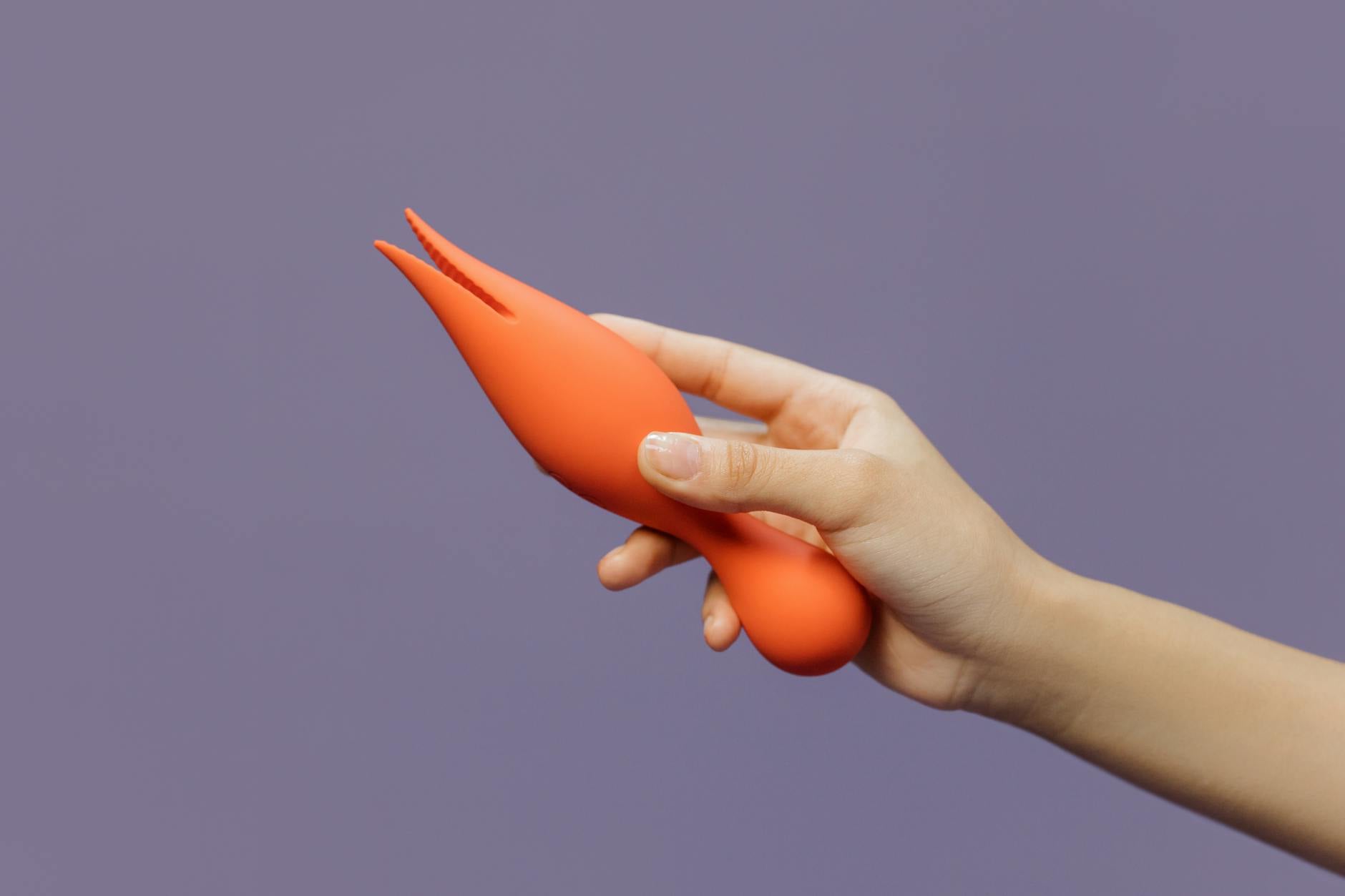
A lemon vibrator works differently. You're holding it. You're in control of every variable. The suction mechanism (rather than direct friction) also creates a different sensory profile than skin-to-skin touch. It's stimulation without the vulnerability of being touched.
For people rebuilding after trauma, this matters enormously. You get to experience arousal and pleasure without triggering the neural pathways that learned to associate those zones with danger. Over time, as your body experiences safety in that context, those pathways can begin to rewire.
This isn't therapy. It's scaffolding. It creates a container where healing can happen.
Starting slowly when touch feels threatening
If you've experienced sexual trauma, jumping straight to partnered sex or even intensive self-exploration can retraumatize you. That's not dramatic. That's accurate neurology.
Here's how I recommend starting with a lemon clitoral vibrator if you're in active recovery:
Week one: just the object. Hold it. Look at it. Turn it on and off at your own pace. Notice the sound, the vibration in your hand. This is exposure without pressure. Your nervous system learns that the object itself is safe.
Week two: external thighs or lower abdomen. Not the clitoris yet. Somewhere nearby that feels less charged. Use the lowest setting. Keep sessions short (five to ten minutes). You're teaching your body that this tool brings sensation, not threat.
Week three: approach with permission. Check in with yourself before each session. "Am I wanting this right now?" If the answer is anything but yes, stop. Consent to yourself is where rebuilding starts.
Beyond: The timeline is yours. Some people move to clitoral stimulation within weeks. Others take months. There's no achievement standard here.
Why the suction design helps more than vibration alone
Wand vibrators and traditional clitoral vibrators use penetrating vibration. The sensation is intense and direct. For someone with touch aversion, this can feel overwhelming or triggering, because it mimics the sensation of hands-on stimulation.
A lemon vibrator's suction mechanism is gentler and more diffuse. It creates a pulling sensation rather than a vibrating one. The stimulus spreads across a wider area instead of concentrating on a point. For nervous systems in recovery, this feels safer. It's stimulation, but not the kind that triggered the original trauma.
As you work with the suction sensation over time, your nervous system gets data: "This is pleasure. This is safe. This is under my control." That rewiring is the actual work of recovery.
The role of partnership during your own healing
If you're in a relationship and rebuilding after trauma, your partner's role isn't to fix you. It's to create space for you to fix yourself.
This means sometimes stepping back. Not rejecting, not abandoning, but giving you permission to explore your own pleasure without their involvement. Some partners struggle with this because they feel responsible for your healing or because they want to show they're trustworthy. Neither of those is your job to manage.
A conversation that helps: "I'm rebuilding my relationship with my own body right now. For a while, that means solo exploration. It's not about you. It's about me learning that pleasure is possible again." Then tell them when you're ready to include them, if you are.
Many couples find that once the touch-averse partner rebuilds pleasure on their own, they can eventually reintegrate partnered sex in new ways. But that's a later chapter. Right now, the work is solo.
When to see a therapist alongside self-care
A lemon vibrator is a tool. It's not a replacement for trauma-informed therapy. If your touch aversion is connected to sexual assault, intimate partner violence, or any form of violation, working with a therapist trained in trauma (EMDR, somatic experiencing, or trauma-focused cognitive behavioral therapy) is valuable.
Therapy helps you process the original violation and retrain your nervous system. Self-pleasure with a tool like a lemon vibrator gives your body a safe container to practice new associations with pleasure and touch.
Both together move faster than either alone.
Rebuilding desire when your nervous system has shut it down
Touch aversion doesn't just affect physical sensation. It often kills desire altogether. Your body says no so loudly that you stop wanting pleasure in the first place. This can feel like your sexuality is permanently gone.
It's not. It's dormant.
One of the surprising things that happens when people use a lemon clitoral vibrator after trauma is that desire starts to return. Not because the toy is magic. Because experiencing pleasure in a safe, controlled context gradually teaches your nervous system that arousal doesn't equal danger.
You might use a lemon vibrator for three months without feeling much. Then one day, something shifts. You feel anticipation before you use it. That's your desire waking up. That's healing happening.
What to watch for if healing stalls
Sometimes using a toy alone doesn't move the needle on touch aversion. You might feel numb during solo stimulation. You might feel more triggered afterward. These are signs that you need more support, not that you're broken.
Shutdown states (numbness, dissociation during arousal) often need therapy to address. Your nervous system might need help learning to stay present with pleasure. That's completely treatable.
If you're experiencing this, check in with a trauma-informed therapist or sex therapist. They can help you move beyond the plateau.
FAQ
Can you use a lemon vibrator after sexual trauma without triggering yourself?
Yes, but only if you go slowly and check in with your own consent frequently. Start with non-erotic use (just holding it, feeling it) before approaching sensitive areas. Your pace is the right pace. If you feel triggered at any point, stop immediately. Healing isn't linear, and some days will be harder than others.
How long does it take for touch aversion to improve?
It varies widely depending on the trauma, your support system, and whether you're in therapy. Some people see shifts within weeks. Others take six months or longer. What matters is that you're moving, not that you're moving fast. Pressure to heal faster often retraumatizes you.
Should you tell your partner you're using a lemon vibrator if you have touch aversion?
That's your call. If you're comfortable being vulnerable with your partner, sharing this process can actually deepen intimacy. You're showing them what safety looks like to you. But you don't owe anyone access to your healing journey. Solo exploration is solo for a reason sometimes.
What if a lemon clitoral vibrator feels too intense even at the lowest setting?
Backtrack. Use it without turning it on. Hold it, look at it, let your body adjust to having that object nearby. You might only turn it on once a week at first. Exposure therapy is slow. That's intentional.
Can touch aversion improve if you don't use toys at all?
Yes, but tools like lemon vibrators can speed up the process. A lemon clitoral vibrator gives your nervous system a specific, controlled context for learning that pleasure is safe. Therapy alone works. Therapy plus a safe self-pleasure tool often works faster.
How do you know if you're ready to involve your partner again?
You'll feel it. You might notice that you start wanting their closeness. Or you might ask yourself: "Do I want to try partnered touch right now?" and the answer is yes rather than dread. The key is that the desire comes from you, not from obligation or pressure. Move at that speed, not faster.
You deserve pleasure on your own terms
Healing after trauma means reclaiming your body as yours. Not your perpetrator's, not your partner's, not your therapist's. Yours.
A lemon clitoral vibrator is just an object. But it can be a powerful one: a way to tell your nervous system that pleasure is possible again, that you're in control, that safety exists in your own hands.
If you're early in this journey, go slowly. There's no timeline. If you want to talk through next steps or find a trauma-informed therapist in your area, reach out to us. We've supported hundreds of people rebuilding after violation, and we don't have judgment about any part of the process.
Your pleasure matters. Your healing matters. And you get to decide what that looks like.